5 Signs Your Switchboard Needs Upgrading
By All Phase Electrical QLD · Published
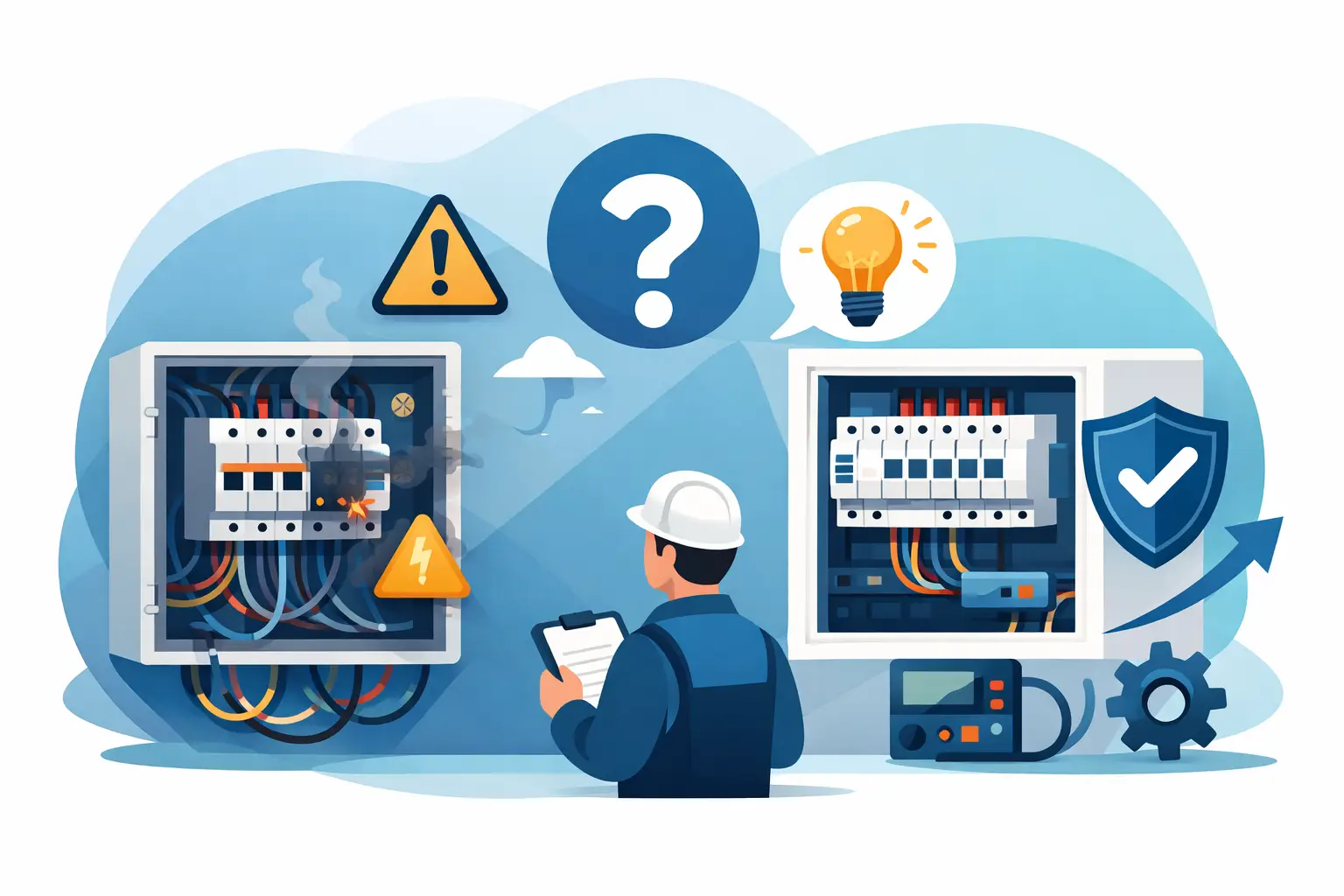
A switchboard problem rarely announces itself at a convenient time. More often, it starts with flickering lights during dinner, a tripping circuit when the air con kicks in, or an older board that has quietly fallen behind the demands of a modern home or business. If you have been wondering about the 5 signs your switchboard needs upgrading, the short answer is this: recurring faults, outdated safety components, heat damage, overloaded circuits, and renovation or appliance changes are all worth taking seriously.
Your switchboard is the control point for your property’s electrical system. It distributes power, protects circuits, and helps reduce the risk of electric shock and fire when fitted with the right safety devices. When it is old, damaged, or undersized for current usage, the issue is not just inconvenience. It can become a safety and compliance concern.
Why switchboard condition matters
Many property owners do not look at their switchboard until something goes wrong. That is understandable, but it also means early warning signs can be missed. Older homes across the Gold Coast and Logan, as well as ageing commercial tenancies, often have electrical infrastructure that was adequate years ago but no longer suits today’s load requirements.
Air conditioners, induction cooktops, EV chargers, home offices, security systems and commercial equipment all place added demand on the system. A switchboard that was installed for a much simpler setup may still be functioning, but that does not always mean it is safe or suitable.
1. Your power keeps tripping
Frequent tripping is one of the clearest signs something needs attention. If a safety switch or circuit breaker trips once after a clear fault, that may be doing exactly what it is supposed to do. If it happens regularly, especially when you use everyday appliances, there is likely an underlying issue.
Sometimes the problem is a faulty appliance or a single overloaded circuit. In other cases, the switchboard itself is the issue. Older boards may not be set up to handle the electrical load of a modern household or workplace. Circuits can become unbalanced, protective devices may be outdated, and the whole system can struggle under normal demand.
This is where a proper inspection matters. Repeated tripping is not something to ignore or work around. Resetting the breaker over and over does not solve the cause, and if faults are developing behind the board, delay can make repairs more expensive.
2. You still have ceramic fuses or an old-style board
One of the most common answers to the question of 5 signs your switchboard needs upgrading is simply the age and type of the board itself. If your property still uses ceramic fuses, rewireable fuses, or an old timber-backed switchboard, it is time to have it assessed by a licensed electrician.
These older systems were standard in their day, but they do not offer the same level of safety as modern switchboards with circuit breakers and safety switches. Rewireable fuses in particular are outdated and less practical when faults occur. They are also more prone to misuse, especially if incorrect fuse wire has been fitted at some point.
Modern switchboards are designed to provide stronger circuit protection and faster fault isolation. They also make it easier to identify problems, carry out maintenance, and add new circuits when needed. For landlords, investors and business owners, this can also help with compliance and reduce the risk of disruption for tenants or staff.
3. There are signs of heat, burning, or physical damage
A healthy switchboard should not smell burnt, show scorch marks, or feel unusually hot. If you notice discolouration around breakers, melted insulation, buzzing sounds, or a burning smell near the board, switch off power if safe to do so and arrange urgent electrical attention.
Heat damage can point to loose connections, overloaded circuits, deteriorated components, or internal arcing. None of these issues should be left to monitor. Electrical heat damage tends to worsen rather than stabilise, and it increases fire risk.
In coastal and humid parts of South East Queensland, switchboards can also be affected by moisture, corrosion and general wear over time. Outdoor boards and boards in older meter box locations may deteriorate faster than owners realise. Even if the damage looks minor from the outside, internal components can be compromised.
4. Your switchboard does not have modern safety switches
Not every older switchboard includes RCD safety switches on all required circuits. That is a problem because safety switches play a critical role in reducing the risk of electric shock. They are designed to disconnect power quickly if they detect a fault.
A common misconception is that if power works normally, safety protection must be adequate. That is not always the case. An older board may still supply electricity throughout the property while lacking the safety devices expected in a modern installation. This is especially relevant in homes with families, rental properties, workshops and commercial spaces where people use multiple appliances and power outlets every day.
There can be some variation depending on the age of the property and what electrical work has been done over the years. That is why inspection is important rather than assumption. If your board lacks proper safety switch protection, an upgrade can bring the installation closer to current expectations and improve overall safety.
5. You are adding major appliances, renovating, or changing how the property is used
Sometimes the switchboard has not failed yet, but the property has outgrown it. That is another of the 5 signs your switchboard needs upgrading. If you are planning a renovation, installing a new air conditioner, adding a pool pump, fitting CCTV, upgrading to electric cooking, or setting up EV charging, the existing board may need modification or replacement to support the extra demand.
The same applies to commercial premises. A tenancy fit-out, additional office equipment, refrigeration, workshop machinery or updated lighting can all change load requirements. In many cases, it makes more sense to address the switchboard early rather than wait for faults after the new equipment is connected.
This is one area where trade-offs matter. A smaller adjustment may be enough if the board is modern and has spare capacity. But if the board is already old, crowded, or missing key protection devices, patching around the edges can be false economy. A full upgrade may be the better long-term option.
What a switchboard upgrade can improve
A switchboard upgrade is not just about replacing old parts. Done properly, it can improve safety, reliability and day-to-day usability across the property. It can also make future additions easier, whether that is extra power circuits, air conditioning, security systems or other electrical improvements.
For homeowners, that often means fewer nuisance trips and greater confidence that the electrical system is keeping up with the way the home is actually used. For landlords and property managers, it can reduce maintenance issues and support safer tenancy conditions. For small businesses and facility managers, it can help avoid downtime and provide a more suitable foundation for operational equipment.
When to call a licensed electrician
If any of these warning signs sound familiar, the safest next step is a professional assessment. Switchboards are not a DIY area. Even what appears to be a minor issue can involve live components, hidden faults and serious safety risks.
A licensed electrician can inspect the board, test the circuits, identify whether the issue is isolated or system-wide, and recommend the right course of action. In some cases, the fix may be straightforward. In others, a full switchboard upgrade is the safest and most practical solution.
For properties in Ormeau, the Gold Coast and Logan, local conditions, building age and usage patterns all play a part in what is suitable. That is why site-specific advice matters more than generic assumptions.
All Phase Electrical works with homeowners, landlords and businesses that need clear answers on electrical safety and reliable solutions that suit the property. If your switchboard is showing its age, acting unpredictably, or struggling with added demand, it is better to deal with it early than wait for a fault to decide for you.