Best EV Charger Features for Gold Coast Homes
By All Phase Electrical QLD · Published · Updated
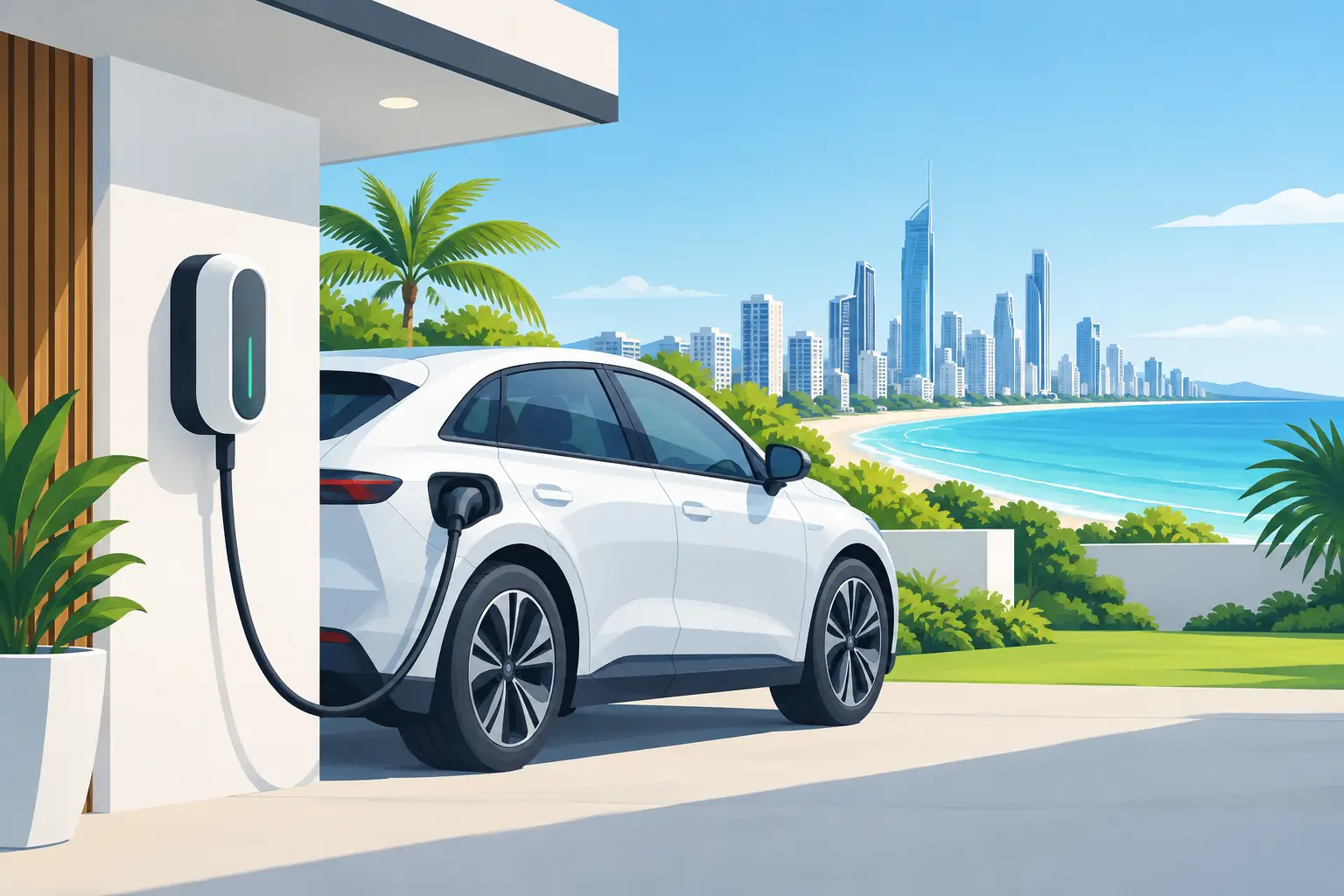
A home EV charger should suit more than the car parked in your garage. It needs to suit your switchboard, household electricity use, parking arrangement and future plans. The best EV charger features make charging safe, practical and economical without placing unnecessary demand on your home's electrical system.
For homeowners across Ormeau, the Gold Coast and Logan, the right choice usually comes down to a properly installed dedicated circuit, sensible charging control and equipment rated for the location. A licensed electrician can assess these details before installation, helping avoid a charger that looks good on paper but does not suit the property.
Best EV charger features to prioritise
Load management for a safer electrical supply
Load management is one of the most valuable features for many homes. An EV charger can draw a significant amount of power, particularly when charging at higher speeds. If the oven, air conditioner, pool equipment and hot water system are also operating, the total demand can place pressure on the existing supply.
A charger with dynamic load management monitors household consumption and adjusts the charging rate when demand rises. This helps keep the property within its available electrical capacity and can reduce the need for expensive supply upgrades in some situations.
It is particularly useful in older homes, larger households and properties with ducted air conditioning or pool equipment. It does not replace a proper electrical assessment. Your electrician still needs to confirm the condition and capacity of the switchboard, main cabling and protective devices before recommending an installation approach.
Smart scheduling for lower-cost charging
Electricity plans with off-peak or time-of-use pricing can make overnight charging more affordable. Smart scheduling allows the charger to begin and stop charging at selected times, so the vehicle can charge when electricity rates are lower rather than as soon as it is plugged in.
This feature is useful when a vehicle is parked at home for several hours overnight. You may set the charger to finish by your usual departure time, rather than charging at full speed throughout the evening. It is a practical way to manage running costs without changing your routine.
Some charging systems offer app controls, usage reports and remote start or stop functions. These can be helpful, but app quality should not be the only reason to choose a charger. Reliable charging, safe electrical protection and a suitable installation matter more than extra screens and notifications.
Solar integration where it makes sense
For homes with solar panels, a charger that can use surplus solar generation may be worth considering. These systems can be set to favour solar power that would otherwise be exported to the grid, potentially improving the value you receive from your solar system.
There is a trade-off. Solar-only charging can be slower and less predictable, especially during overcast weather or when household demand is high. A flexible charger is generally the better option because it can switch between solar-priority charging, scheduled grid charging and normal charging as required.
Solar integration also needs to be considered alongside the inverter, metering arrangement and the home's overall electrical load. It is not simply a matter of connecting the charger to the solar panels.
A charging speed that matches your routine
Higher charging output is not automatically better. The right charging speed depends on the vehicle, the time it spends parked at home and the electrical capacity available at the property.
For many households, a single-phase charger provides more than enough energy overnight for daily driving. Three-phase charging can provide faster charging where the vehicle supports it and a three-phase supply is available, but it may not be necessary for every home. It can also involve additional installation work.
Before selecting a unit, consider how far the car travels on a typical day and how long it is usually at home. A vehicle that travels modest distances and is parked overnight rarely needs the fastest available charger. Choosing the appropriate capacity can help control installation costs while still delivering reliable daily charging.
Built-in safety features and suitable protection
An EV charger is a fixed electrical appliance and should be installed with the correct circuit protection. Quality units commonly include monitoring features that can detect faults or abnormal conditions, but the charger itself is only one part of the safety system.
The installation should include a dedicated circuit, correctly selected cable, suitable circuit breaker and residual current device protection as required for the equipment and installation. Requirements can vary depending on the charger and site conditions, which is why the manufacturer's instructions and current Australian electrical rules must be considered.
Avoid treating a standard power point as a permanent high-use charging solution. Portable charging leads can have a place for occasional use, but regular EV charging through unsuitable outlets, extension leads or damaged connections creates unnecessary heat and fire risk. A purpose-designed wall charger installed by a licensed electrician is the safer long-term option.
Weather protection for outdoor parking
Not every home has an enclosed garage. Where charging will occur on a driveway, carport or external wall, the charger's enclosure rating and placement are important. The unit should be suitable for outdoor exposure and positioned to minimise the effects of driving rain, direct sun, impact and accidental cable damage.
On the Gold Coast and Logan, heat, humidity and storms are part of the decision. A charger may be marketed as weather-resistant, but poor placement can still shorten its service life. Consider where the cable will sit when not in use, whether vehicles can safely park without pulling on it and whether the unit is protected from knocks.
Cable management is a small feature that makes a daily difference. A holster, cable hook or tethered lead helps keep the charging area tidy and reduces trip hazards. It also prevents the connector from being left on the ground where it can collect dirt and moisture.
Tethered cable or socketed outlet
A tethered charger has a cable permanently attached to the unit. It is convenient because you simply park, plug in and charge. This suits households with one EV and a consistent parking position.
A socketed charger has an outlet on the front of the unit, allowing you to use a separate charging cable. It can offer more flexibility if you change vehicles, have visitors with different connector requirements or want the cable stored away when not in use. The trade-off is that there is one more item to handle each time you charge.
The best option depends on convenience, security and how the charging space is used. For rental properties and shared parking areas, a socketed unit with access control may be the more practical choice.
Access control for shared or exposed locations
If the charger is located at the front of the property, in an apartment car park, at a workplace or in a tenancy with multiple users, access control deserves attention. Options may include RFID cards, PIN controls or app-based authorisation.
This feature can prevent unauthorised use and help track energy consumption where charging costs need to be allocated. For a straightforward private garage, it may be unnecessary. For landlords, business owners and strata-managed sites, it can provide useful control from day one.
Connectivity that remains useful if the internet drops out
Wi-Fi, Bluetooth and mobile connectivity can support scheduling, software updates and energy reporting. However, charging should not depend entirely on a phone app or a reliable home internet connection. Check that the charger can still operate safely if the network is unavailable.
It is also worth considering long-term manufacturer support. A low-cost charger with an app that is no longer maintained can become frustrating quickly. Look for clear warranty terms, local support arrangements and a manufacturer with an established presence in Australia.
Do not overlook the switchboard
A charger installation often reveals issues that have been easy to ignore, such as an overcrowded switchboard, ageing protective devices, limited spare capacity or poor labelling. These issues do not always prevent an EV charger from being installed, but they may need to be addressed first to ensure the work is safe and compliant.
A switchboard upgrade can also be an opportunity to prepare for future electrical demand, including solar batteries, additional air conditioning, induction cooking or a second EV. The goal is not to overbuild the system. It is to make sure the installation is designed around the way the property will actually be used.
For homeowners and property managers, the most reliable path is to choose a charger based on the site, then have it installed and tested by a licensed electrician. All Phase Electrical can assess your existing electrical setup and recommend an EV charging solution that is practical for your property, not just popular online.
A well-chosen charger should quietly become part of your routine: plug in when you arrive home, wake up ready to drive, and know the electrical work behind it has been done properly.