Commercial Air Conditioning Maintenance Plans
By All Phase Electrical QLD · Published · Updated
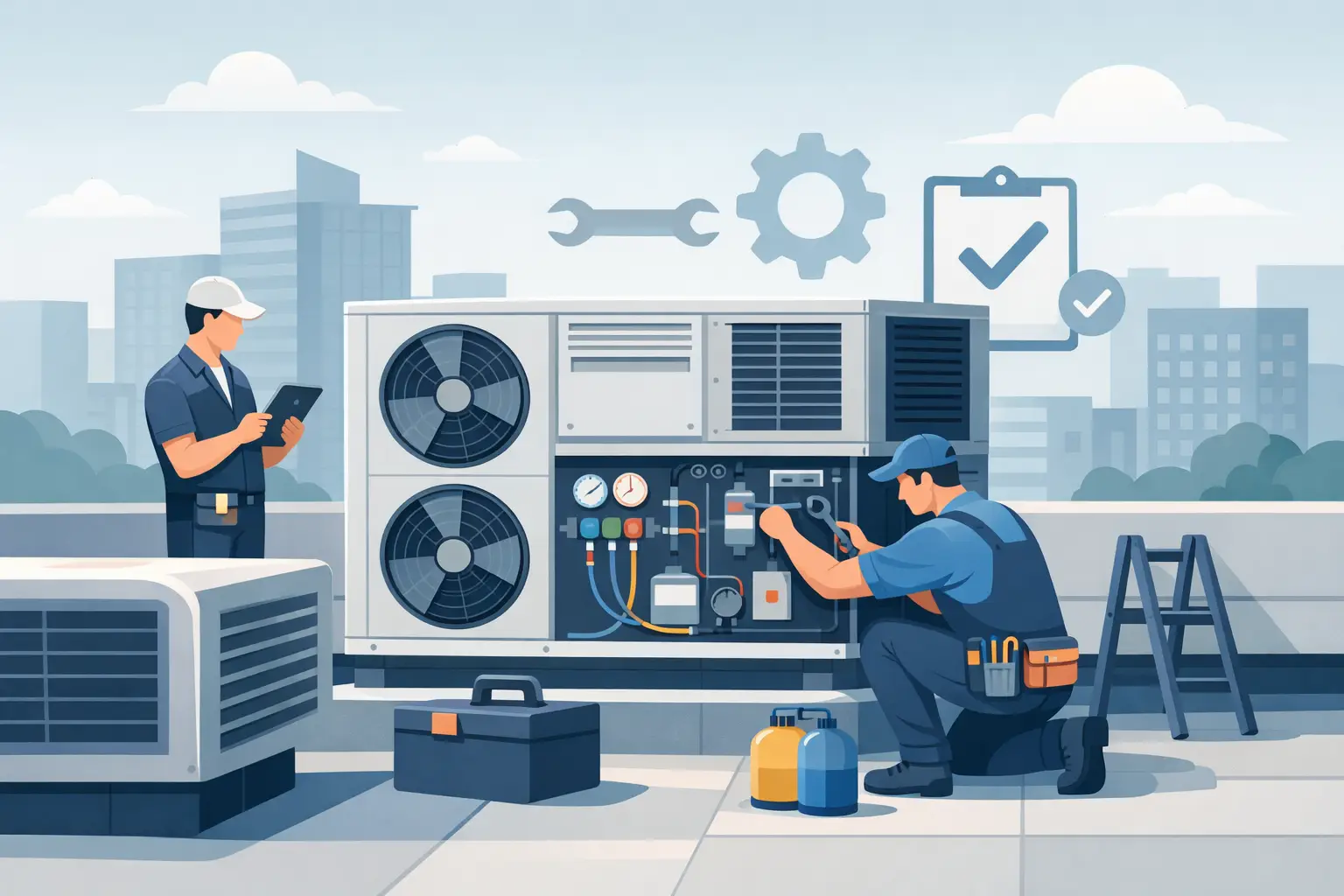
A packed café at lunch, a busy office in January or a retail shop with doors opening all day cannot afford an air conditioner that quits without warning. Commercial air conditioning maintenance gives business owners and property managers control over that risk, helping systems cool efficiently, operate safely and last longer in Gold Coast and Logan conditions.
For many premises, air conditioning is not simply a comfort feature. It affects staff wellbeing, customer experience, stock protection and day-to-day productivity. Waiting until a unit is noisy, leaking or no longer cooling usually turns a manageable service visit into an urgent repair, often at the worst possible time.
Why commercial air conditioning maintenance matters
Commercial systems work hard. Long operating hours, heat, humidity, salt in coastal air, dust, kitchen grease and high foot traffic can all place pressure on equipment. Even a system that appears to be running can be using more power than necessary or developing faults that will eventually cause a breakdown.
Planned maintenance identifies issues before they interrupt business. A qualified technician can assess airflow, drainage, electrical connections, controls and component condition, then address small defects while they are still straightforward to repair. This is particularly valuable for businesses with several units, larger ducted systems or air conditioning that must run through trading hours.
There is also a cost consideration. Dirty filters and coils make the system work harder to move air and remove heat. Restricted airflow can reduce comfort while increasing electricity consumption. A service will not make every older system perform like new, but it can help it operate closer to its intended efficiency and reveal when replacement is becoming the more sensible option.
What a professional service should cover
The exact scope depends on the type, age and use of the system. A small wall-mounted split system in a shop needs different attention from a multi-head installation, cassette units or a ducted commercial system. However, a proper maintenance visit should be more than a quick filter clean.
A technician will generally inspect the indoor and outdoor units for signs of wear, damage, corrosion and poor airflow. Filters should be cleaned or replaced where required, while coils, fans and condensate drains should be checked for dirt, blockages and mould growth. A blocked drain can cause water leaks, ceiling damage and unpleasant odours if left unresolved.
Electrical checks are equally important. Air conditioners rely on safe wiring, isolators, switches, capacitors and control components. Loose connections or deteriorated electrical parts can affect reliability and may create a safety concern. Where issues are found, work should be completed by appropriately licensed professionals rather than treated as a general handyman task.
Performance testing helps identify whether the system is actually delivering suitable cooling. This may include checking operating temperatures, airflow, thermostat response and unusual noise or vibration. If a fault is suspected, the technician can advise whether further diagnostics, repairs or specialist refrigeration work is required.
Signs your system needs attention before its next service
Some faults develop gradually, which makes them easy to overlook. Staff may simply turn the thermostat lower, accept a warm meeting room or assume that a noisy unit is normal. These early signs are worth acting on before they become a shutdown.
Look out for rooms that take too long to cool, uneven temperatures between areas, reduced airflow or an air conditioner that runs constantly. Water dripping from an indoor unit, damp marks near ceiling grilles, musty smells and visible mould around vents should also be investigated promptly. Rattling, buzzing, grinding or repeated clicking can point to loose parts, fan issues or electrical faults.
A sudden rise in power bills is another reason to arrange an inspection. Electricity pricing and seasonal use vary, so higher bills do not automatically mean the air conditioner is at fault. Still, when consumption rises alongside poor cooling or longer run times, maintenance is a sensible first step.
How often should commercial systems be serviced?
There is no single schedule that suits every premises. A lightly used office system may need professional servicing annually, while a restaurant, gym, medical practice, childcare centre or retail site with extended hours may benefit from more frequent checks. Systems exposed to coastal conditions or heavy dust also need closer attention.
A practical approach is to book servicing before the hottest part of the year, then set a maintenance schedule based on operating hours, equipment type and the environment. Filters may require attention more often than a full service, particularly where there is dust, hair, grease or frequent door traffic.
Property managers should also consider tenancy arrangements. Confirming who is responsible for routine air conditioning maintenance can prevent disputes and delays when a fault occurs. Keeping service records is useful for budgeting, warranty requirements and demonstrating that equipment has been maintained responsibly.
Maintenance, repairs and replacement are different decisions
Maintenance keeps a serviceable system clean, safe and operating as intended. Repairs address a specific failure, such as a damaged fan motor, faulty capacitor, blocked drain or electrical issue. Replacement becomes the discussion when a unit is unreliable, inefficient, undersized or nearing the end of its practical life.
The cheapest immediate option is not always the lowest-cost decision over time. Repeated repairs on an ageing system can become difficult to justify, especially if the equipment struggles to cool the space or causes regular business disruption. On the other hand, replacing a unit solely because it needs routine service is unnecessary.
A qualified assessment should explain the condition of the existing equipment, the likely repair cost and the expected benefit of replacement. For commercial operators, timing matters too. Planned replacement during a quieter period is often easier to manage than an emergency changeover during a heatwave.
Protecting comfort without disrupting operations
Maintenance is most effective when it is organised around the way your business operates. Offices may prefer early morning or after-hours access. Retailers need to avoid peak trading periods. Hospitality venues may need work scheduled around food preparation and customer service. Clear access to indoor units, outdoor condensers, switchboards and roof areas also helps the visit run efficiently.
Before the technician arrives, note any rooms that feel warmer than others, leaks, noises, odours or times when the system performs poorly. This information can shorten fault-finding and ensures intermittent issues are not missed simply because the unit happens to be working on the day.
For sites with several units, labelling each system and maintaining a simple service history makes future maintenance easier. It also helps identify whether the same unit is developing repeated faults, allowing decisions to be based on evidence rather than guesswork.
Choosing the right local contractor
Commercial air conditioning involves electrical safety, equipment performance and the practical needs of an operating premises. Choose a contractor with the appropriate licensing, experience and ability to communicate clearly about what has been found. You should receive straightforward advice on recommended work, urgent safety issues and whether a repair is worthwhile.
For businesses across Ormeau, the Gold Coast and Logan, All Phase Electrical provides qualified electrical and air conditioning support with a focus on practical solutions and dependable service. Having one local team able to assess related electrical concerns can be particularly helpful when an air conditioning fault involves isolators, supply issues or switchboard capacity.
Do not wait for the first extreme-temperature day to test whether your system can cope. Booking maintenance before demand peaks gives you more time to plan repairs, protect staff and customers, and keep your premises comfortable when it matters most.