EV Charger Installation Home Guide
By All Phase Electrical QLD · Published · Updated
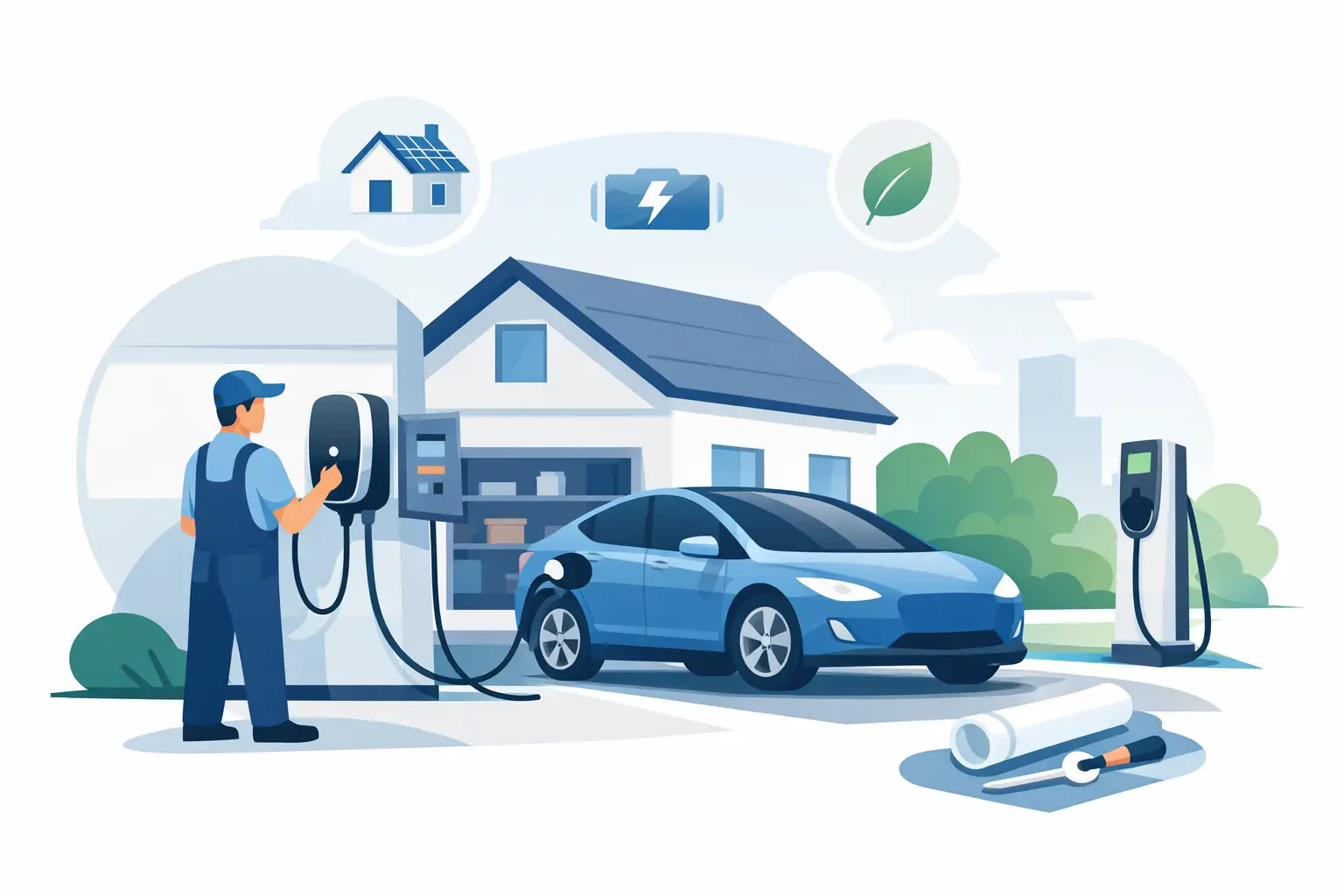
If you have bought an electric vehicle and you are still relying on a standard power point, you will notice the limits quickly. Charging is slower, daily use takes more planning, and there is always the question of whether your existing setup is right for the load. A proper EV charger installation home setup gives you faster charging, better safety, and a system designed for the way you actually use the vehicle.
For homeowners across Ormeau, the Gold Coast and Logan, the main issue is not whether home charging is worth it. It usually is. The real question is what needs to happen at your property before a charger can be installed safely and legally. That depends on your switchboard, your available capacity, where the charger will be mounted, and how the cable run can be managed.
What EV charger installation home usually involves
A home EV charger is not just a matter of fixing a unit to the wall and plugging it in. In most cases, the charger needs a dedicated circuit, correct protection devices, compliant cabling, and testing by a licensed electrician. If your home has an older switchboard or limited spare capacity, upgrades may be required before the charger can be connected.
This is where professional assessment matters. Two homes in the same street can have very different electrical conditions. One may be ready for a straightforward install. Another may need a switchboard upgrade, a new circuit route, or load management to prevent overloading when the oven, air con and charger are all running at once.
The location of the charger also affects the scope of works. A garage wall close to the switchboard is usually simpler than a detached carport or a parking area on the far side of the home. Longer cable runs, weather exposure and mounting requirements can all change the installation method and cost.
Is your home ready for an EV charger?
The first step in EV charger installation home planning is checking whether your electrical system can support the charger you want. Many newer homes are in a better position because their switchboards and circuits were built with higher household demand in mind. Older properties may still be suitable, but they often need some level of upgrade.
A licensed electrician will usually look at the switchboard condition, available space for new protection devices, main supply capacity and the likely demand from other appliances. If your home already has ducted air conditioning, a pool pump, electric hot water or a large solar system, that all needs to be considered.
There is no one-size-fits-all answer here. Some households only need overnight charging and can use a lower-powered charger without issue. Others want faster charging to suit frequent driving, multiple vehicles, or limited charging windows. The right setup depends on how much energy you need each day and how your home is already using power.
Choosing the right charger for your home
Most homeowners are deciding between a basic AC wall charger and a smarter unit with scheduling, app control and load balancing. Both can do the job well. The best option comes down to how much control you want and whether your property would benefit from smarter energy management.
A simpler charger can be a solid choice if your usage is predictable and your electrical system has enough capacity. A smart charger may be better if you want to charge during off-peak periods, monitor usage, or coordinate charging with rooftop solar. In some homes, smart load management is less of a convenience feature and more of a practical requirement.
It is also worth checking compatibility with your vehicle and connector type. Most modern EV chargers used in Australian homes will suit common vehicles, but it still pays to match the charger to the car and to your future plans. If you expect to replace your vehicle in a few years, installing a charger that offers flexibility can make more sense than going for the cheapest unit available today.
Why switchboard upgrades are often part of the job
One of the most common reasons an EV charger install becomes more involved is the switchboard. If the board is outdated, overcrowded or missing the right safety protection, it may not be suitable for the new circuit. In that case, upgrading the switchboard is not an optional extra. It is part of making the installation safe and compliant.
This is especially relevant in older homes across established suburbs, where electrical infrastructure may not have kept pace with modern appliance loads. A charger adds a significant ongoing electrical demand. If the existing system is already under pressure, the safest outcome is often to improve the board before adding more load.
There is a practical upside to doing that work properly. A better switchboard supports not just the charger, but the broader reliability and safety of the home. If you are already considering other upgrades such as air conditioning, solar integration or security equipment, it can make sense to look at the electrical capacity of the property as a whole rather than handling each item in isolation.
Installation location matters more than most people expect
Where your car parks each night has a big effect on the installation. If the charger can be mounted close to the vehicle in a covered garage, the job is usually more straightforward. If the charger needs to be installed outdoors, on a post, or a long distance from the main board, extra materials and labour may be involved.
The best location is not always the closest wall. The cable should be practical to use, protected from damage, and positioned so it does not create a trip hazard or clutter the area. Weather exposure also matters. Outdoor installations need equipment and mounting methods suited to local conditions, including heat, rain and coastal exposure in some Gold Coast areas.
A good installation should feel tidy and intentional. You want the charger to be easy to reach, easy to use, and safely integrated into the property rather than added as an afterthought.
What affects the cost of EV charger installation home projects
Homeowners often ask for a simple flat price, but the cost can vary for good reason. The charger itself is only one part of the total job. The final price depends on the electrical condition of the property, the charger specification, the cable run distance, the mounting method and whether additional works are needed at the switchboard.
A basic install in a modern home with a nearby switchboard may be relatively straightforward. A more complex property with an older board, difficult cable access or a detached parking area will cost more. Neither scenario is unusual. It just comes down to site conditions.
This is why on-site assessment is important. It gives you a clear picture of what is required and reduces the risk of surprises after work starts. If your electrician identifies capacity issues or compliance concerns early, those can be addressed before the charger is installed rather than becoming a problem later.
Why a licensed electrician is essential
EV charging equipment places sustained demand on your electrical system. That makes correct installation critical. This is not a job for shortcuts, improvised connections or general handyman work. It needs to be installed by a licensed electrician who understands circuit protection, load calculation, compliance requirements and safe testing.
That matters for safety, but it also matters for performance. A poorly installed charger can trip circuits, charge unreliably, or create ongoing issues with other parts of the home. A properly installed unit should work consistently and integrate cleanly with your existing electrical system.
For local property owners, working with a qualified contractor such as All Phase Electrical also means you are dealing with a team that understands the homes, electrical conditions and service expectations common across Ormeau, Gold Coast and Logan. That local experience helps when the job involves more than just the charger itself.
Planning ahead if you expect your needs to change
It is worth thinking beyond your current vehicle. Many households that install one EV charger now will add a second electric vehicle later. Others may renovate, add solar, or upgrade air conditioning. If your electrical system is already close to capacity, planning for future demand during the charger installation can save money and disruption later.
That does not mean overbuilding every job. It means making sensible choices based on how the property is likely to be used. Sometimes that involves selecting a charger with smart features. Sometimes it means upgrading infrastructure once, properly, instead of patching things together over time.
A home EV charger should make daily life easier, not introduce electrical guesswork. If you are considering EV charger installation home works, the right place to start is with a licensed assessment of your switchboard, capacity and charging location. A clear plan at the beginning usually leads to a safer install, better performance and fewer compromises once the charger is in use.
As more homes move towards electric vehicles, the best results will always come from treating the charger as part of the property’s electrical system, not as a stand-alone accessory.