How to Know a Switchboard Is Unsafe at Home
By All Phase Electrical QLD · Published
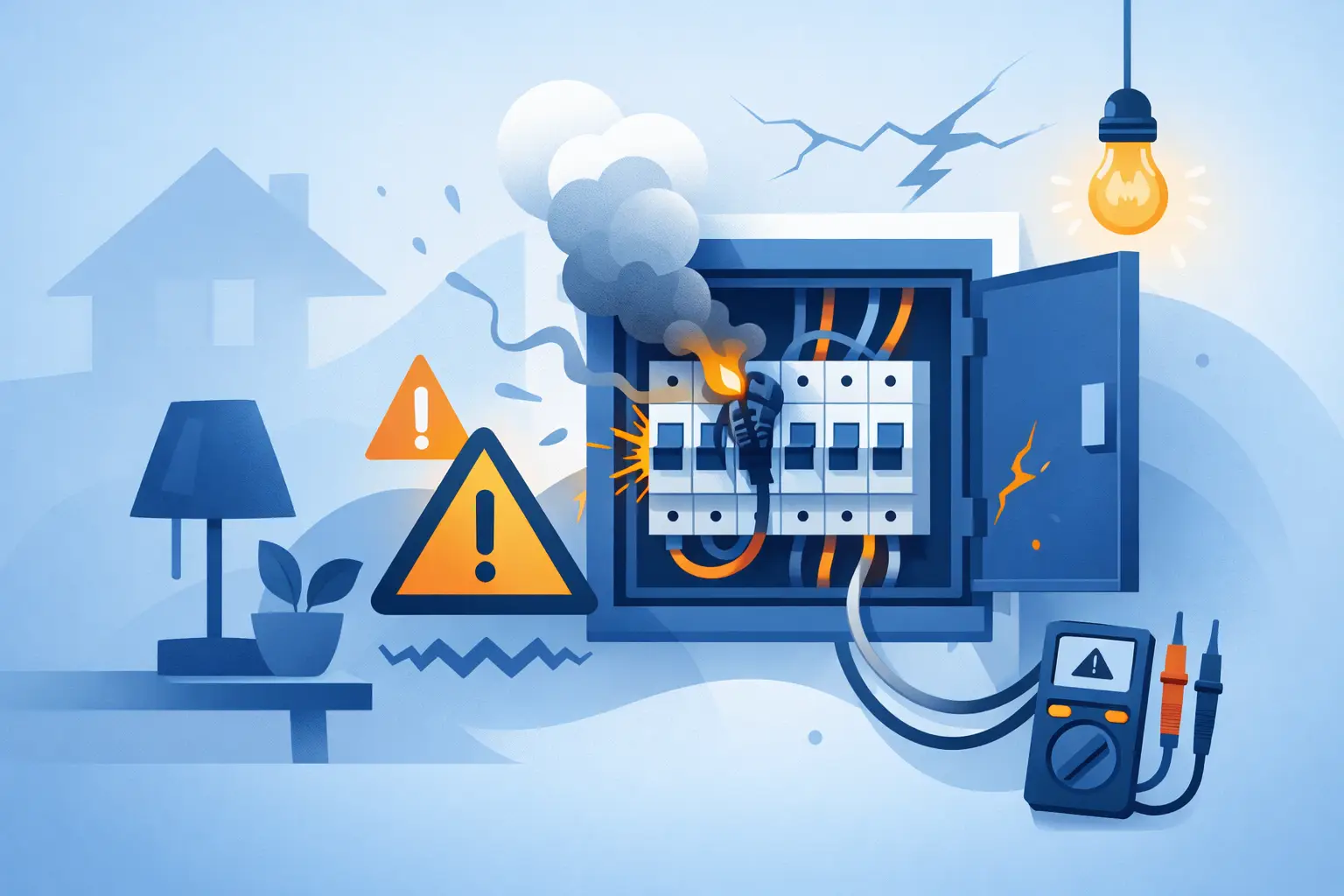
A switchboard should sit quietly in the background, distributing power safely to the parts of your home or business that need it. When it starts tripping, buzzing, feeling warm or showing signs of damage, it is no longer a problem to put off. Knowing how to know a switchboard is unsafe can help protect people, property and essential appliances before a minor fault becomes a serious electrical hazard.
For properties across Ormeau, the Gold Coast and Logan, switchboard issues are often uncovered during renovations, after repeated power trips, when adding air conditioning, or when an older property is inspected for sale or tenancy. Some warning signs are obvious. Others need a licensed electrician to assess properly. What matters is acting early and never attempting repairs inside the board yourself.
Signs Your Switchboard May Be Unsafe
Circuit breakers trip repeatedly
A circuit breaker trips to stop wiring from overheating when there is an overload, short circuit or fault. One trip after using too many high-demand appliances on the same circuit may simply mean the circuit is overloaded. However, repeated tripping, especially when little is running, points to a fault that needs investigation.
Do not keep resetting the breaker and hoping it holds. If a breaker trips again, leave it off where practical and arrange for a licensed electrician to identify the cause. The issue may be a faulty appliance, deteriorated wiring, moisture ingress or a problem within the switchboard itself.
The board is warm, smells burnt or makes noise
A normal switchboard should not produce a burning smell, crackling, buzzing or hissing sound. It should not feel hot around the cover or individual breaker positions. These signs can indicate loose connections, overloaded components or heat damage, all of which create a fire risk.
If you notice smoke, sparking, visible arcing or a strong burning odour, keep clear of the switchboard. If it is safe to do so, turn off power at the main switch without touching damaged or hot equipment. Call emergency services on 000 if there is fire, smoke or immediate danger, then contact a licensed electrician for urgent electrical assistance.
There is visible damage or moisture
Cracked covers, missing blanks, exposed wiring, rust, water marks and discoloured switches all deserve attention. A switchboard enclosure is there to prevent accidental contact with live parts. Missing covers or gaps can allow fingers, pests, dust and moisture into areas that must remain protected.
Water and electricity are a particularly dangerous combination. Water may enter a board after heavy rain, flooding, roof leaks, plumbing faults or condensation. Never open a wet switchboard or try to dry it with a heater, fan or cloth. Keep people away and have it inspected by a qualified electrician.
Your property has ceramic fuses or very old equipment
Older switchboards may still use rewireable ceramic fuses rather than modern circuit breakers and safety switches. Age alone does not prove that a board is immediately unsafe, but older equipment may not provide the same level of fault protection expected in a modern installation.
A board that has been added to over decades can also become crowded, poorly labelled or fitted with mismatched components. That makes fault finding slower and may indicate previous unlicensed work. An electrical safety inspection can determine whether the equipment is serviceable, compliant for its intended use and suitable for the electrical load your property now demands.
Lights flicker or appliances behave unpredictably
Flickering lights can come from a failing globe or appliance, but widespread flickering, dimming when equipment starts, unexplained power loss or appliances cutting in and out may indicate a supply, connection or circuit issue. These symptoms should not be treated as normal, particularly if they are getting worse.
A loose neutral connection can cause unstable voltage and potentially damage appliances. If several circuits are affected, or the issue occurs at the switchboard, arrange a prompt assessment rather than replacing appliances one by one.
How to Know a Switchboard Is Unsafe for Modern Use
Safety is not only about whether the board appears damaged. A switchboard can look neat but still be undersized or lack the protection needed for the way a property is used today.
Modern homes commonly run air conditioning, induction cooking, pool equipment, EV charging, solar systems, home offices and multiple entertainment devices. Small businesses may add refrigeration, machinery, data equipment, security systems or extra workstations. As demand grows, older switchboards can struggle with capacity, circuit separation and protection requirements.
Safety switches, also called residual current devices or RCDs, are a key part of electrical safety. They are designed to disconnect power quickly when they detect current flowing where it should not, such as through a person or damaged appliance. They do not prevent every electrical incident, but they provide vital additional protection against electric shock.
If your switchboard has no safety switches, only partial RCD coverage, or safety switches that will not reset, it needs professional attention. Your electrician can test the devices, check which circuits they protect and advise whether an upgrade is appropriate. Requirements can differ depending on the type of premises, the age of the installation and the work being carried out, so a site-specific assessment is essential.
When a Switchboard Upgrade Is the Right Answer
Not every fault means the entire switchboard must be replaced. Sometimes the solution is a damaged breaker, a faulty appliance circuit or a loose connection that can be repaired safely. A good electrician should identify the actual cause rather than recommending a replacement by default.
An upgrade is often the sensible option when the board has obsolete fuse equipment, insufficient safety switch protection, signs of heat damage, no spare capacity, poor circuit labelling or an enclosure that no longer protects the equipment. It may also be needed before installing larger air conditioning systems, solar equipment, an electric vehicle charger or additional circuits for a renovation.
A modern switchboard upgrade can improve protection, make circuits easier to isolate and provide room for future electrical work. The exact scope depends on the condition of the existing wiring, incoming supply, property type and planned electrical load. In some older homes, the switchboard may be only one part of a wider electrical upgrade.
What You Can Safely Check Without Opening the Board
Property owners and managers can observe warning signs, but the cover should remain closed. Do not remove panels, tighten terminals, replace breakers or work around live electrical components. In Queensland, electrical work must be completed by appropriately licensed people.
You can note which circuits trip, what was running at the time, whether outages happen during rain, and whether lights flicker in one area or across the property. Check that circuit labels are legible and that the switchboard area is accessible, dry and free from stored items. This information gives your electrician a clearer starting point and can reduce delays in diagnosing the issue.
If you have safety switches with test buttons, follow the manufacturer instructions and any advice supplied by your electrician or property manager. A safety switch that does not trip when tested, or will not reset afterwards, should be assessed promptly. Do not force it into position.
Extra Considerations for Landlords and Businesses
Rental properties and commercial premises need particular attention because electrical faults can affect tenants, staff and customers. Landlords should respond quickly when tenants report shocks, tingles, burning smells, recurring trips or damaged electrical equipment. Delays can expose occupants to risk and turn a manageable repair into property damage or a lengthy outage.
For businesses, a switchboard fault can stop trading, affect refrigeration or IT equipment, and disrupt security or access systems. Planned inspections and upgrades are often less disruptive than waiting for a breakdown. Facilities with changing loads should have their electrical capacity reviewed before new equipment is installed.
A qualified electrician can assess the board, test safety devices, identify faults and explain the practical options in plain language. All Phase Electrical provides licensed switchboard inspections, repairs and upgrades for homes and businesses throughout Ormeau, the Gold Coast and Logan. If your board is tripping, overheating, damaged or simply showing its age, arranging an inspection now is the safer way to keep control of the problem.