How to Spot Overloaded Circuits Safely at Home
By All Phase Electrical QLD · Published · Updated
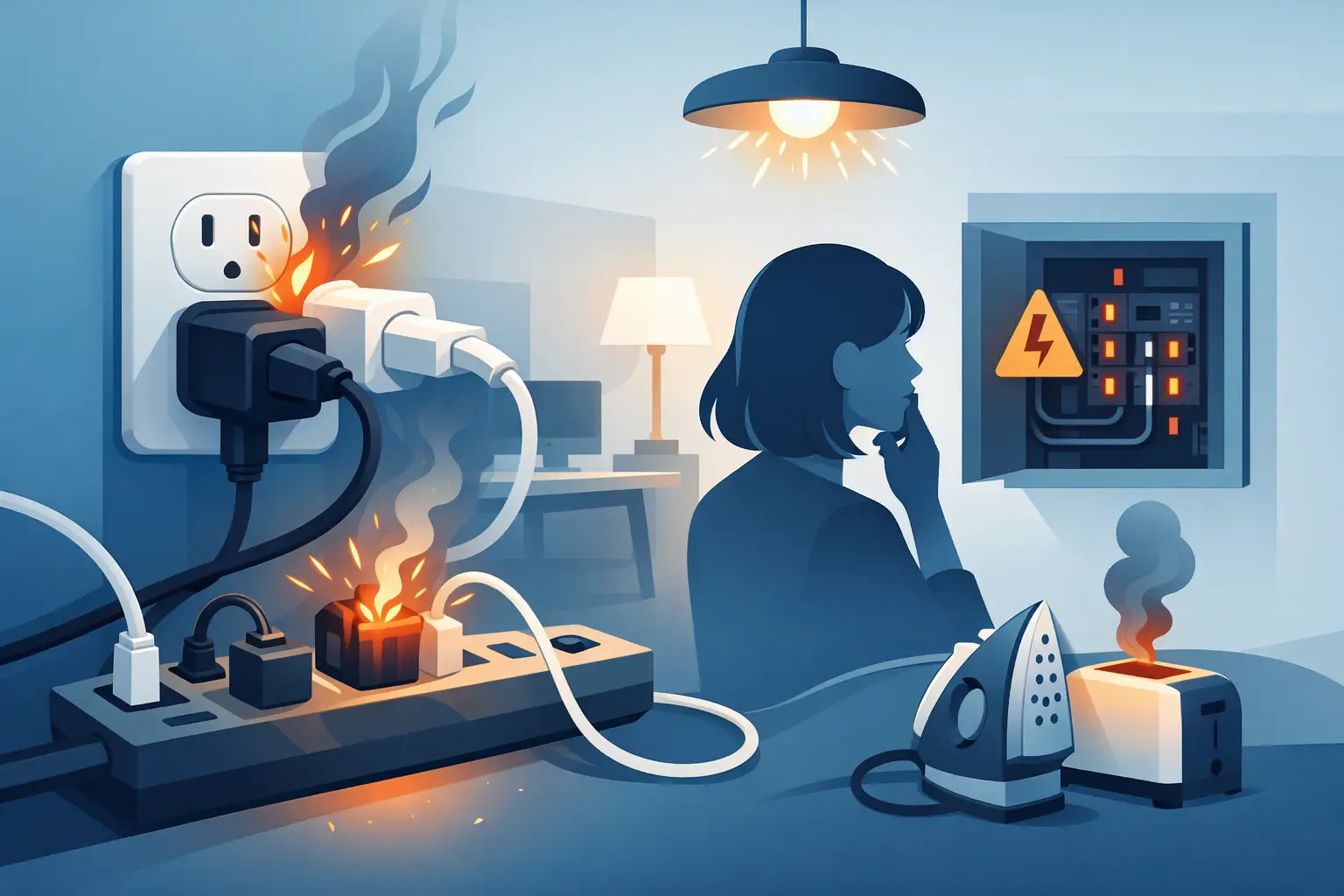
The kettle clicks on, the microwave starts, and suddenly the kitchen power cuts out. Knowing how to spot overloaded circuits can help you respond safely before a minor inconvenience becomes a serious electrical hazard. For homes and businesses across Ormeau, the Gold Coast and Logan, repeated tripping, warm outlets and flickering lights should never be dismissed as normal.
An overloaded circuit happens when more electricity is being drawn than that circuit is designed to carry. Your switchboard safety devices are there to interrupt the supply before wiring overheats. The trip is doing its job, but the reason it tripped still needs attention.
What an overloaded circuit looks like
The most obvious warning sign is a circuit breaker or safety switch that trips when several appliances are running. You may notice it when using high-demand equipment at the same time, such as a kettle, toaster, microwave, dishwasher, portable heater or air conditioner. In a workshop or commercial space, the same issue can occur when tools, refrigeration, computers or lighting are added to an already busy circuit.
A single trip is not always proof of an overload. A faulty appliance, damaged lead, moisture, or a wiring fault can also trip a safety switch or circuit breaker. What matters is the pattern. If power cuts out after you add another appliance or turn on a particular group of items, overloading is a likely cause.
Other signs deserve prompt attention, especially where they occur repeatedly:
- Lights dim, flicker or brighten when an appliance starts.
- Power points, switches or plugs feel warm to the touch.
- A burning smell, buzzing sound, discolouration or scorch marks appear around an outlet or switchboard.
- Extension leads and power boards are being used as a permanent way to supply equipment.
- A circuit breaker trips often, even though it has been reset correctly.
- Appliances run slowly, shut down unexpectedly or lose power when other equipment is switched on.
Warmth, burning smells and visible damage are not symptoms to monitor over time. Turn off and unplug appliances if it is safe to do so, avoid touching damaged fittings, and arrange an urgent assessment by a licensed electrician.
Why circuits become overloaded
Every circuit has a current rating and is designed to supply a limited electrical load. In many homes, several power points in nearby rooms are connected to the same circuit. That means the outlets may look separate, but they are sharing the same available capacity.
Kitchens are a common trouble spot because heating appliances draw substantial power. A kettle, air fryer, toaster and microwave can place a heavy load on one circuit in a short period. Garages and outdoor areas can also be problematic, particularly when freezers, chargers, tools and pressure cleaners are supplied through power boards or extension leads.
Older homes may have fewer circuits than modern households need. Renovations can also change how a property is used. A spare bedroom becomes a home office, a garage becomes a gym, or a retail tenancy adds new equipment without the electrical supply being upgraded. The circuit that was adequate years ago may no longer suit the load it carries.
In commercial premises, overloading can be less obvious because equipment is switched on gradually. A few extra monitors, a new printer, display lighting, refrigeration or portable air conditioning units can push an existing circuit beyond its intended use. This can disrupt operations and, more importantly, create a preventable safety risk.
How to spot overloaded circuits safely
Start by observing what is operating just before the power trips. If the circuit trips only when several appliances are used together, turn those appliances off and unplug them before resetting the breaker. Then switch them back on one at a time. This can help identify whether the issue follows a particular appliance or occurs only when the combined load is too high.
Do not keep resetting a breaker that immediately trips. Repeated resets can mask a fault and expose wiring or connected equipment to further stress. If the switch will not stay on after appliances are unplugged, leave it off and contact a licensed electrician.
You can also check the condition of plugs, leads and outlets without dismantling anything. Look for cracked covers, loose plugs, black marks, melted plastic or leads trapped under furniture and doors. Never remove a power point cover, open the switchboard, replace a breaker or attempt electrical repairs yourself. Electrical work in Queensland must be carried out by appropriately licensed persons.
Pay attention to where power boards are doing too much work. A quality power board with overload protection can provide extra outlets for low-demand items, but it does not increase the capacity of the wall circuit. Plugging one power board into another, known as daisy-chaining, is particularly risky. It can overload the board, lead or outlet before the circuit protection operates.
Overload or electrical fault: why the difference matters
An overloaded circuit usually trips when demand rises. For example, the kitchen circuit may be fine until the kettle and microwave run together. Reducing the number of appliances in use may stop the tripping, but it is still worth considering whether the circuit layout suits your household or business needs.
A fault can cause tripping even with little or no load connected. The safety switch may trip after rain, when a certain appliance is plugged in, or as soon as the circuit is reset. A fault may involve damaged insulation, moisture, an appliance defect or a problem in the fixed wiring. It requires professional testing rather than trial and error.
It is also possible to have both issues. An old or damaged outlet can become hot under a heavy load, while an undersized or poorly distributed electrical supply encourages people to rely on extension leads. A licensed electrician can test the circuit, identify the cause and recommend the right fix rather than simply replacing a tripping breaker.
Practical ways to reduce the load
Small changes can reduce nuisance tripping while you arrange a proper assessment. Spread high-demand appliances across different circuits where possible, and avoid running multiple heating appliances from the same kitchen or living area outlets at once. Use fixed wall outlets rather than permanent extension leads, and unplug equipment that is not needed.
For businesses, keep an updated record of what is connected in work areas, kitchens, server spaces and storerooms. When new equipment is installed, consider its power demand before simply finding the nearest outlet. This is particularly relevant for tenancy fit-outs, hospitality spaces, workshops and offices that have grown over time.
These measures are not a substitute for an upgrade where the supply is no longer adequate. Adding more power boards changes access to outlets, not the amount of power safely available. If you regularly need to manage appliance use to stop tripping, dedicated circuits, additional outlets or a switchboard upgrade may be the more reliable long-term option.
When to call a licensed electrician
Arrange professional electrical help if breakers trip repeatedly, an outlet is warm or damaged, lights flicker under normal use, or you rely heavily on extension leads and power boards. An electrician can inspect your switchboard, test circuits and appliances, check the condition of outlets and wiring, and determine whether the issue is an overload or an electrical fault.
Call urgently if you smell burning, see smoke or sparks, notice melted fittings, or hear crackling from an outlet or switchboard. If it is safe, switch off power at the main switch without touching anything hot, wet or visibly damaged. Keep people clear of the area and do not use the affected circuit until it has been inspected.
For property owners, landlords and facility managers, recurring electrical trips are also worth documenting. Note the time, equipment in use and affected area. That information can help a licensed electrician diagnose the problem efficiently and support sensible decisions about repairs or upgrades.
Why a bigger breaker is not the solution
A circuit’s safe capacity depends on the cable size, protective device rating and installation method, not just the number of available outlets. Replacing a breaker with a larger one without checking the wiring can allow cables to overheat before protection operates. Never bypass a safety device or change a breaker yourself.
Loose connections can also generate heat when demand is not unusually high. Reducing appliance use is therefore not proof that a warm or scorched outlet is safe. Leave damaged equipment out of service and have the cause tested.
A circuit that trips is giving you useful warning, not simply causing an inconvenience. Treat that warning early, and you can protect your property, keep essential equipment running and make sure your electrical system is ready for the way you actually use it.