Repair or Replace Switchboard? Know the Signs
By All Phase Electrical QLD · Published
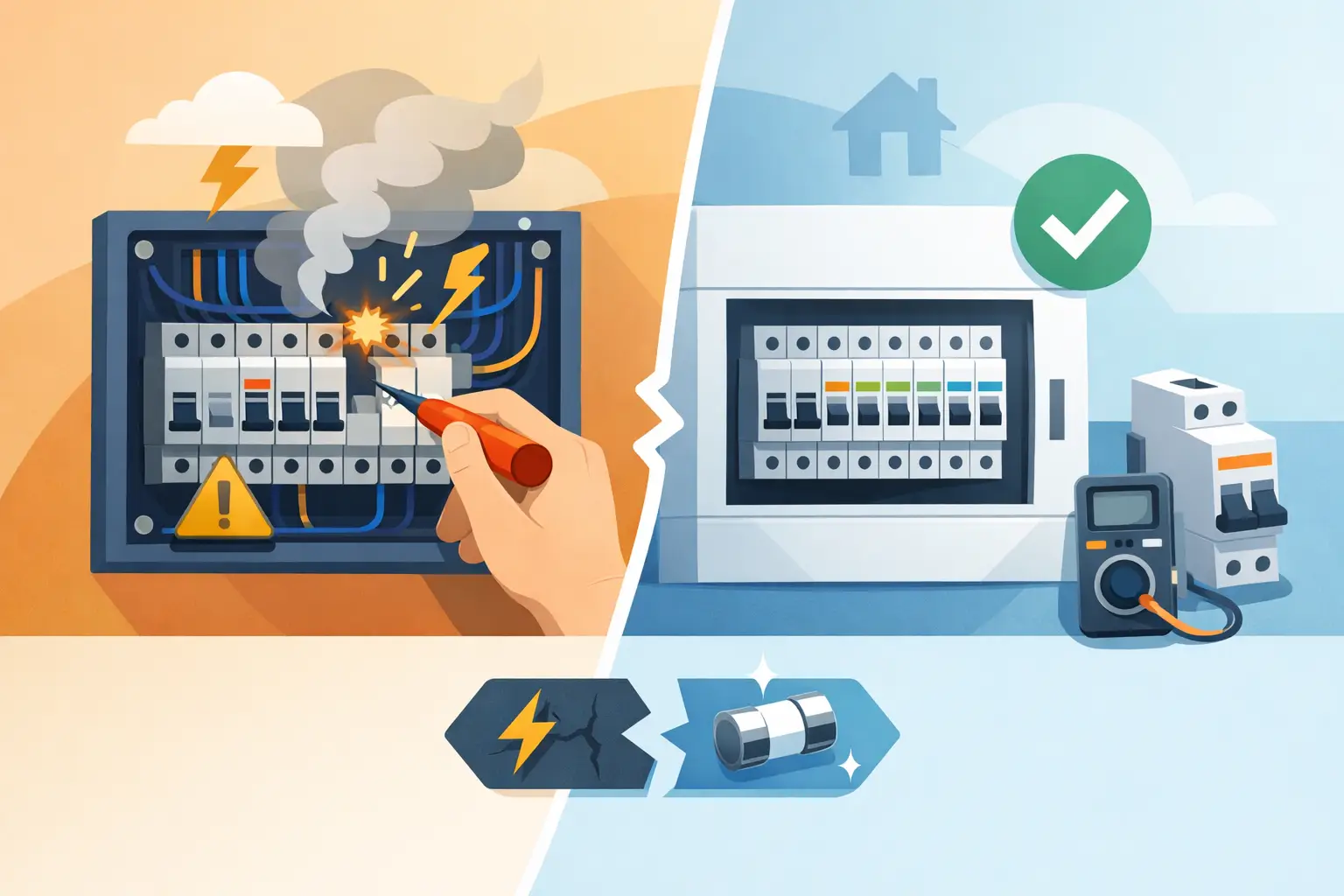
A switchboard rarely fails without giving some warning. Flickering lights, tripping safety switches, a burning smell or an old ceramic-fuse board are all reasons to ask whether to repair or replace switchboard equipment. For homes and businesses across Ormeau, the Gold Coast and Logan, the right answer depends on the fault, the board’s age, its condition and whether it still provides the protection your property needs.
Switchboard work is not a DIY job. It involves live electrical components, protective devices and compliance requirements that need to be assessed by a licensed electrician. Acting early can prevent repeated outages, damaged appliances and, more importantly, serious electrical safety risks.
When a switchboard repair may be the right option
A targeted repair can be practical when the switchboard itself is modern, compliant and in good condition, but a single component has failed. This may include a faulty circuit breaker, a worn safety switch, loose connection or damaged enclosure part. A licensed electrician can test the board, identify the source of the fault and replace the affected component where appropriate.
For example, a safety switch that trips only when one appliance is connected may point to an appliance or circuit issue rather than a failing switchboard. Similarly, a breaker that will not reset could be responding correctly to an overloaded or damaged circuit. The cause needs to be found before anything is replaced.
Repair is generally the sensible path when the board has adequate circuit capacity, correctly operating RCD protection and no signs of heat damage, corrosion or outdated wiring practices. It can restore safe operation without the cost of a full upgrade.
That said, repeated repairs on an ageing board can become false economy. If several devices are failing, circuits are regularly overloaded or replacement parts are difficult to source, an upgrade often gives better long-term value and a safer result.
Signs it is time to replace a switchboard
Older switchboards were not designed for the electrical demand of a modern property. Air conditioning, induction cooking, pool equipment, EV chargers, home offices, security systems and additional appliances all place more demand on household circuits. Commercial premises may face even higher loads from equipment, lighting, refrigeration or machinery.
Replacement should be considered if your property has an old fuse board with rewireable ceramic fuses, especially where there is limited or no modern safety-switch protection. Fuses can be effective in the right application, but older boards often lack the level of circuit separation and RCD protection expected in modern installations.
Other warning signs include heat marks around breakers, a buzzing or crackling sound, melted plastic, rust or water damage, a burning odour, exposed wiring, or breakers that trip regularly without a clear cause. Never ignore these signs. Turn off power if it is safe to do so and arrange urgent help from a licensed electrician.
A replacement is also often needed when there is simply no room for additional circuits. If you are installing split-system air conditioning, solar equipment, a battery, new kitchen appliances, a pool pump, CCTV or an EV charger, the existing board may need upgrading to safely accommodate the work. Trying to squeeze new circuits into an overcrowded switchboard can compromise access, labelling and future maintenance.
Repair or replace switchboard: the key decision factors
The condition of the enclosure and internal wiring is the starting point. A newer board with one faulty breaker is very different from a decades-old board with brittle cables, mixed fuse types and signs of overheating. Your electrician should inspect the whole installation, not just reset the device that has tripped.
Safety protection is the next factor. RCDs, often called safety switches, are designed to disconnect power quickly when an earth leakage fault is detected. They are a critical layer of protection against electric shock. A modern switchboard upgrade may provide RCD protection across appropriate circuits, with individual circuit breakers arranged and labelled to make faults easier to locate.
Capacity matters as well. A board should be suited to your current electrical load and leave a sensible allowance for planned upgrades. Property owners often only discover capacity problems after investing in a renovation or new appliance. Discussing future needs during an inspection can avoid having to alter the switchboard twice.
Finally, consider the cost of ongoing faults. A lower upfront repair cost is worthwhile when it resolves an isolated problem. It is less attractive when outages keep interrupting your home, tenants or business operations. For landlords and commercial operators, repeated electrical issues can lead to tenant complaints, lost trading time and unnecessary call-out costs.
What happens during a switchboard upgrade?
A professional upgrade begins with an assessment of the existing board, supply, circuits and electrical demand. The electrician will identify any visible defects, determine which circuits require protection and confirm whether the installation can support proposed additions such as air conditioning or solar.
The old equipment is then replaced or reconfigured with suitable modern protective devices. Circuits are clearly labelled, connections are checked and the completed work is tested. Depending on the property and scope, there may be a planned power interruption while the work is carried out.
The exact design varies between properties. A small home, a larger family residence, a retail tenancy and a workshop do not have the same load requirements. The aim is not to fit the biggest board available. It is to install a safe, compliant solution with the correct protection, capacity and layout for the premises.
If the switchboard is located outdoors or in a damp area, weather exposure and enclosure condition need particular attention. Water ingress and corrosion can damage protective devices and connections over time. In coastal parts of the Gold Coast, regular inspection can be especially worthwhile where salt air or moisture is a factor.
Do not treat nuisance tripping as normal
A circuit breaker or safety switch that trips is doing a job, but frequent tripping is not something to work around. Avoid repeatedly resetting a device without investigating why it operated. Do not replace a breaker with a larger rating, bypass a safety switch or keep using an appliance that causes a trip. These actions can remove protection and increase the risk of fire or electric shock.
If a switchboard is hot to touch, making unusual noises, giving off an odour, showing scorch marks or causing partial power loss, treat the issue as urgent. Keep people away from the board and contact a licensed electrician. For businesses, isolate affected equipment where safe and follow your site’s electrical safety procedures.
Choosing the right electrical contractor
The quality of assessment matters as much as the equipment installed. A licensed electrician should explain whether the issue is isolated or systemic, outline the options in plain language and recommend work based on safety, condition and future demand. You should not be pushed into a full replacement when a verified repair is suitable, nor reassured with a quick fix when the board is clearly outdated or unsafe.
All Phase Electrical provides licensed switchboard repairs and upgrades for homes and businesses throughout Ormeau, the Gold Coast and Logan. Whether you are dealing with a recurring fault, planning a renovation or improving an investment property, a proper inspection gives you a clear basis for the next step.
A switchboard is easy to forget when everything is working. If yours is tripping often, showing its age or struggling to support new electrical work, arranging an assessment now can give you safer power and fewer unwelcome surprises later.