Choosing a Security Camera Installation Business
By All Phase Electrical QLD · Published · Updated
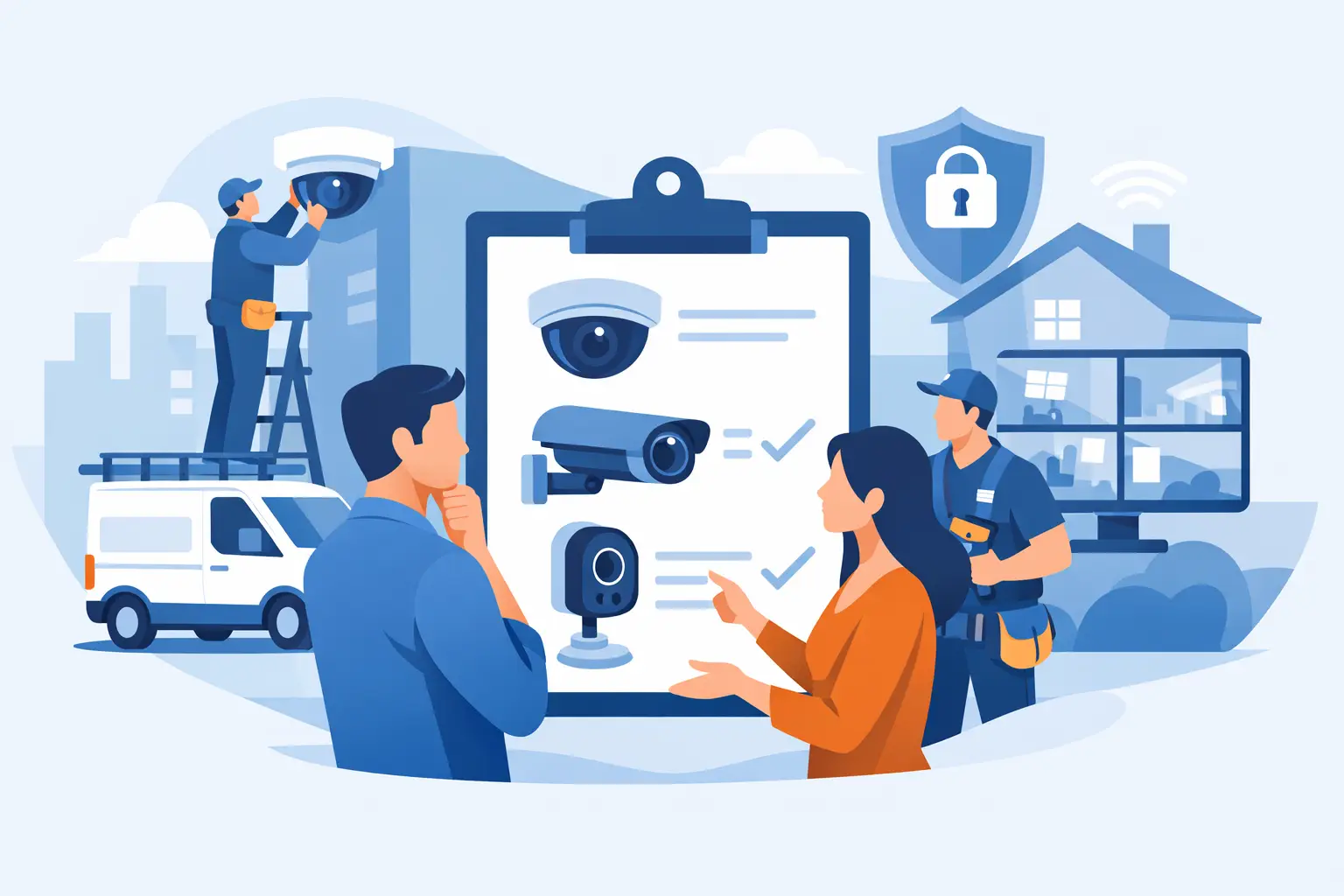
A security camera installation business should do more than mount cameras around a building. The right contractor assesses your property, identifies practical coverage gaps, installs equipment safely and leaves you with a system that is easy to use. For homeowners and businesses across Ormeau, the Gold Coast and Logan, that means security designed around how your site actually operates.
A poorly planned CCTV system can create a false sense of security. Cameras may be positioned too high, pointed towards glare, blocked by gutters or trees, or unable to capture a usable image at night. Choosing a licensed electrician with CCTV experience helps ensure the installation is safe, considered and suited to the property.
Choosing a security camera installation business
Security cameras are connected equipment. They need suitable power, secure cabling, correct positioning and reliable connectivity where remote viewing is required. That is why electrical capability matters as much as camera selection.
A qualified installer can assess the electrical requirements before work begins, rather than relying on extension leads, exposed cables or unsuitable power points. This is particularly relevant for external cameras, large homes, workshops, warehouses, offices and commercial sites where cable routes need to be protected and discreet.
When comparing providers, look for a contractor that can explain the proposed layout in plain language. You should understand what each camera will cover, whether it will record continuously or on motion, where footage will be stored and how you will access it. A good recommendation is based on the site, not simply the largest number of cameras.
Start with the areas that matter most
Most properties do not need a camera on every wall. They need coverage of the locations where access, activity or risk is highest. At a home, this often includes the front entry, driveway, side gate, rear yard and any detached garage or shed. For rental properties, clear coverage of shared entry points can also assist with oversight while respecting tenant privacy.
For businesses, priorities may include customer entrances, staff access points, loading areas, car parks, storage rooms, cash handling areas and perimeter gates. Each site is different. A café may need a clear view of its till and rear delivery door, while a trade yard may place greater value on gate access and vehicle movement after hours.
The camera position is just as important as the location. A unit aimed directly at a rising or setting sun may produce washed-out footage. A camera looking down from too high may show movement without providing useful facial detail. Night coverage also needs consideration, especially around unlit driveways, acreage properties and commercial premises set back from the road.
A site inspection allows these issues to be identified before installation. It also helps determine whether cameras should be fixed, wide-angle, pan-tilt-zoom or designed for more demanding outdoor conditions.
Wired, wireless and remote viewing options
There is no single best camera system for every property. Wired CCTV systems are often preferred where dependable long-term coverage is the priority. They can provide a stable connection and avoid relying on a home or business Wi-Fi signal, but installation may involve more cable routing and planning.
Wireless cameras can be useful where running cables is difficult or where a smaller installation is needed. However, they depend on reliable Wi-Fi coverage, suitable power arrangements and ongoing network performance. On larger blocks or in buildings with concrete walls, sheds or metal roofing, wireless range can be a limiting factor.
Remote viewing is valuable for owners who travel, landlords managing a property remotely and business operators checking premises outside trading hours. It should be set up properly, with secure account access and a clear understanding of what notifications you will receive. Constant alerts from passing cars, pets or nearby foot traffic can quickly become unhelpful, so motion zones and sensitivity settings should be adjusted to the site.
Safe installation is part of the service
CCTV equipment is often installed outdoors, under eaves, around gates and near rooflines. These are not areas for improvised electrical work. Weather exposure, cable protection, access heights and power requirements all need to be managed correctly.
A professional installation keeps cabling tidy, reduces opportunities for tampering and avoids unnecessary damage to walls, ceilings or exterior finishes. Where cameras are installed near a driveway or entry, the installer should also consider the likely path of vehicles and people so the equipment is not easily knocked, obscured or bypassed.
For commercial properties, camera installation may need to work around operating hours, staff access, customer areas and existing electrical infrastructure. A capable contractor can coordinate the work to minimise disruption while maintaining a safe work area.
Plan recording and storage before the cameras go up
A camera is only useful if the footage is available when you need it. Storage requirements depend on the number of cameras, image quality, recording settings and how long footage needs to be retained. Higher-resolution cameras generally provide more detail, but they also require more storage and may need stronger network capacity for remote viewing.
Continuous recording can provide a complete record of activity, while motion-based recording can reduce storage use. The right choice depends on the property. A busy retail entrance may benefit from continuous recording, whereas a quiet side gate may be well suited to motion recording.
Ask where recordings will be stored and what happens if the internet connection drops. Some systems use an on-site recorder, while others may use cloud storage or a combination of both. On-site recording can continue without internet access, but remote viewing will generally be unavailable until the connection returns.
Privacy and placement need common sense
CCTV should protect your property without unnecessarily recording areas where people reasonably expect privacy. Cameras should not be directed into neighbouring homes, private yards, bathrooms or change areas. Businesses also need to consider staff and customer privacy when selecting camera locations.
Visible cameras can act as a deterrent, but they still need to be positioned for useful footage rather than simply placed where they are most obvious. If a camera is intended to monitor an entry point, test the view at different times of day and night before finalising the position.
Questions worth asking before you book
Before engaging an installer, make sure you can get clear answers about the scope of work. Useful questions include:
- Which entrances, access points and high-value areas will the system cover?
- Is the recommended system wired, wireless or a combination, and why?
- How will power and cables be installed and protected?
- Where will footage be stored, and how long is it likely to be retained?
- Will remote viewing and motion alerts be configured before handover?
- What support is available if a camera, recorder or app needs attention later?
The answers should be specific to your home, tenancy or business premises. Be cautious of a quote that recommends the same package without considering your layout, lighting, internet connection or existing electrical setup.
CCTV support from a local licensed electrician
For many property owners, the practical advantage of using a local electrical contractor is having one provider who can manage CCTV alongside power, lighting, switchboard and other electrical requirements. If a new power point is needed, a cable route needs to be planned or exterior lighting would improve camera performance, those considerations can be addressed as part of the job.
All Phase Electrical provides CCTV installation for homes and businesses across Ormeau, the Gold Coast and Logan, with the electrical expertise needed to install systems safely and professionally. The goal is not to overcomplicate security. It is to provide clear coverage, reliable operation and a setup that suits the way you use your property.
A well-planned camera system gives you more than a live view on your mobile. It gives you a practical record of what happens around the places you are responsible for, with equipment installed to do its job when it counts.
A camera mounted high under the eaves may look like a complete security solution, but poor angles, weak night vision and unreliable power can leave the most important areas unprotected. Professional home security camera installation starts with how your property is used, where people enter, and what evidence you would need if an incident occurred.
For homeowners, landlords and business operators across Ormeau, the Gold Coast and Logan, the right CCTV system provides more than a live view on a mobile. It helps deter unwanted activity, supports safer access to the property and gives you a clear record when something needs to be checked. The result depends on sound planning, quality equipment and a properly completed installation.
Wiring, Power and Weather Protection
The quality of the installation behind the camera is as important as the camera itself. Exposed or poorly supported cable can be damaged by weather, pests or accidental impact. It also creates an untidy finish that can affect the appearance of a home or commercial property.
A professional installation plans cable routes through roof spaces, wall cavities or suitable external conduit where required. Connections should be protected from moisture, and exterior equipment must be selected and installed for the conditions it will face. On the Gold Coast and in Logan, heat, driving rain, humidity and storms are real considerations for outdoor CCTV equipment.
Where cameras require new power outlets, alterations to fixed wiring or electrical work, this should be completed by a licensed electrician. Fixed communications cabling must also be installed by an appropriately registered cabler. Using qualified trades protects the system's reliability and ensures the work is handled correctly from the start.
Power protection is worth considering as well. A surge can damage recorders, cameras and network equipment, while a power outage can stop recording entirely. Depending on the property and system, surge protection or backup power may be sensible additions. This is especially relevant for premises that store valuable stock, equipment or vehicles.
Get the Height and Angle Right
Installing cameras too high is a common mistake. A high position can make a camera difficult to tamper with, but it can also record the top of a person's head rather than their face. Too low, and the camera becomes easier to interfere with or damage.
The best mounting height and angle depend on the purpose of the camera. At an entry point, the goal is usually clear facial detail. Along a boundary or driveway, wider coverage may be more valuable. Cameras should also be directed away from strong backlighting where possible. A camera facing directly into the morning or afternoon sun may produce poor footage at the time it is needed most.
Night-time testing should form part of the final setup. Infrared cameras can be affected by nearby walls, gutters and reflective surfaces, which may throw glare back into the lens. In some locations, a properly positioned external light can improve usable footage more than a specification upgrade.