Switchboard Upgrade Before and After
By All Phase Electrical QLD · Published · Updated
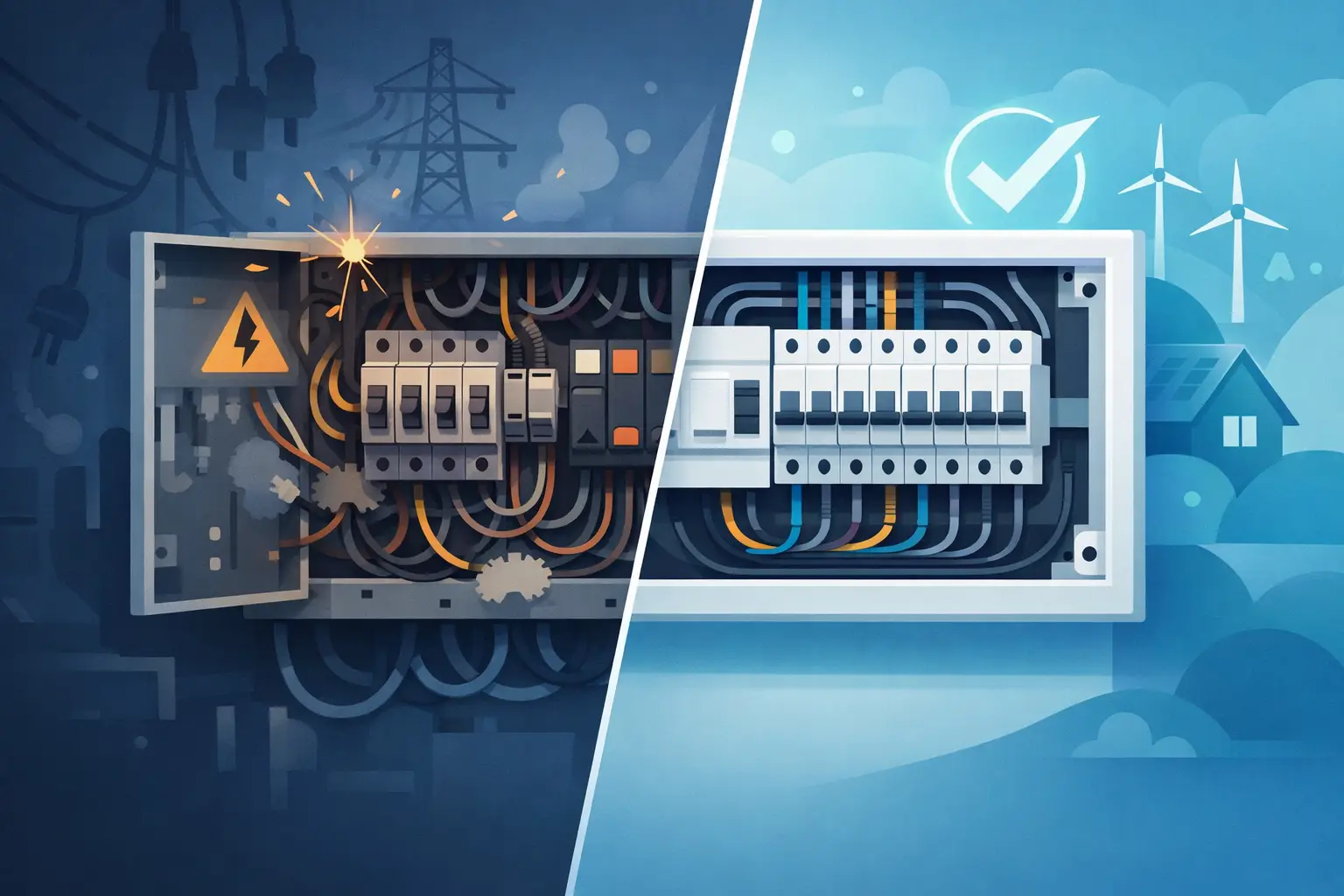
You usually notice a switchboard when something goes wrong - a tripping circuit, lights flickering, a burning smell, or a sparky telling you the board is outdated. Looking at a switchboard upgrade before and after makes the difference clear. What was once an overloaded, ageing setup becomes a safer, more organised system built for the way homes and businesses actually use power now.
For property owners across Ormeau, the Gold Coast and Logan, this is not just about making the board look newer. It is about reducing fire risk, improving electrical safety, supporting modern appliances, and bringing an older installation closer to current standards. If your property still has ceramic fuses, limited circuit protection, or signs of wear inside the board, the before-and-after change can be significant.
What a switchboard upgrade before and after really shows
The biggest difference is usually not cosmetic, although a modern board is typically much neater and clearly labelled. The real change is in protection, capacity and reliability. Older switchboards were often designed for a time when homes had fewer power-hungry appliances and businesses ran less equipment. Air conditioning, induction cooking, home offices, EV chargers, CCTV systems and larger commercial loads can quickly expose the limits of an old board.
Before an upgrade, it is common to find rewireable fuses, ageing breakers, poor labelling, crowded cabling, damaged enclosures, or circuits that no longer suit the building. In some cases, there may be no safety switches protecting key circuits. After an upgrade, the switchboard is generally reconfigured with modern circuit breakers, safety switches where required, clearer identification, and a layout that is easier to inspect, test and maintain.
That matters because a switchboard is the control point for your electrical system. If it is outdated, every connected circuit is relying on older protection methods.
Before the upgrade: common warning signs
A lot of property owners do not realise there is an issue until an electrician opens the board. From the outside, it may look serviceable enough. Inside, the condition can tell a different story.
One of the most obvious concerns is old-style ceramic fuses. These were common in older homes and some commercial sites, but they do not offer the same level of convenience or protection as modern switchgear. If a fuse blows repeatedly, that often points to a load or fault issue that needs proper diagnosis, not a quick replacement.
Another common sign is nuisance tripping. If circuits trip whenever the kettle, oven, air conditioner or workshop equipment are running together, your switchboard may be struggling with demand. That does not always mean the board itself is the only problem. It can also indicate poor circuit distribution or an installation that has been added to over time without a proper overall plan.
Heat damage is another red flag. Discolouration, melted insulation, buzzing, cracking sounds or a burnt smell around the board should be treated seriously. These signs can indicate loose connections, overloaded components or deteriorated hardware.
For landlords and business operators, compliance is also a practical issue. If your switchboard does not provide the required protection for the premises or cannot safely support planned works, an upgrade may move from optional to necessary.
After the upgrade: what changes on site
A proper switchboard upgrade improves more than one thing at once. Safety is the immediate benefit, but usability improves as well.
After the upgrade, circuits are typically better separated and clearly labelled, which makes fault finding faster and safer. If a circuit trips, you can identify the affected area much more easily. Modern breakers and safety switches also respond more effectively to fault conditions, helping protect people and property.
Capacity is another major difference. A newer board can be configured to support current and planned electrical demands more appropriately. That is especially relevant if you are renovating, installing air conditioning, adding a shed supply, fitting new kitchen appliances, or upgrading business equipment.
There is also a maintenance advantage. A tidy, correctly installed switchboard is easier for licensed electricians to inspect and service. That can save time later when additional circuits, repairs or testing are needed.
Safety is the main reason people upgrade
When people compare a switchboard upgrade before and after, the neat finish often stands out first. But appearance is not the point. The real value is safety.
Modern switchboards are designed around better fault protection. Safety switches can reduce the risk of electric shock. Circuit breakers can respond more consistently than older fuse setups. Correctly installed equipment also lowers the chance of overheating caused by poor connections or ageing components.
That said, every board is different. A newer-looking switchboard is not automatically compliant in every respect, and an older board is not always unsafe simply because of its age. The condition of the installation, the type of components, the load on the system and the intended use of the property all need to be assessed properly by a licensed electrician.
Homes and businesses have different upgrade needs
In residential properties, upgrades are often driven by family safety, renovation plans or the addition of modern appliances. A home that once ran a fridge, lights and a few power points may now be supplying split systems, pool equipment, home office gear, security systems and electric hot water. The switchboard needs to keep up.
In commercial settings, the stakes can be higher. Downtime affects trade, staff and customers. A small office, retail tenancy, café or warehouse may need more reliable circuit separation, stronger load management and switchboard protection that supports ongoing operations. In these cases, an upgrade is often as much about business continuity as it is about compliance.
For investment properties, the issue is often risk management. An outdated board can become a problem during maintenance, safety checks, insurance discussions or tenant complaints about tripping circuits.
When an upgrade makes sense
There is no single trigger that applies to every site, but some situations make an upgrade more likely. One is if your property still has ceramic fuses or an obviously dated board. Another is when you are planning major electrical additions and the existing board does not have the room or protection setup to accommodate them properly.
Repeated faults are another sign. If breakers or fuses are constantly tripping, the answer may be a targeted repair, a circuit alteration, or a full upgrade. It depends on what testing shows. The right approach is not guesswork. It is diagnosis.
An upgrade also makes sense when the board condition is poor, when components are no longer suitable, or when previous additions have left the installation messy and difficult to manage. In many cases, the board has simply reached the point where patch-up work is no longer the best long-term option.
What the process usually involves
A switchboard upgrade starts with an inspection of the existing installation. That includes the board itself, the condition of the enclosure, the type of protection in place, the available capacity, and how the circuits are currently arranged. From there, the electrician can advise whether a full replacement, partial reconfiguration or related rectification work is needed.
Because this is safety-critical work, it needs to be carried out by a licensed electrician. There may be supply authority requirements, testing obligations and shutdown planning involved. For businesses, timing can matter if the site needs to stay operational. For homes, it is worth understanding how long the power will be off and whether any other electrical issues are likely to be uncovered once the board is opened.
That last point matters. Sometimes a switchboard upgrade reveals older wiring issues or circuit problems elsewhere in the property. That does not mean the upgrade created the issue. It means the work exposed conditions that were already there.
Why local experience matters
Electrical work is never one-size-fits-all. The age of housing stock, the type of commercial premises, and the way properties have been modified over time all affect what an upgrade should involve. Working with a licensed local electrician means the advice is based on what is actually common in Ormeau, the Gold Coast and Logan, not a generic checklist.
For customers who want one contractor to manage broader electrical work, that also helps when the switchboard upgrade is part of a larger job. If you are adding air conditioning, CCTV, extra power circuits or other services, it makes sense to assess the switchboard at the same time. All Phase Electrical handles these kinds of integrated upgrades regularly, which can simplify planning and avoid piecemeal fixes.
A switchboard does not need to look dramatic to be a problem, and a good upgrade is not about appearances alone. If your board is outdated, overloaded or showing signs of wear, the safest move is to have it checked before a minor fault turns into a larger one.
If your lights flicker when the air con starts, your safety switch trips without warning, or your switchboard still has old ceramic fuses, it is time to pay attention. This home switchboard safety upgrade guide is for homeowners, landlords, and property managers who want to know when an upgrade is necessary, what it fixes, and what to expect from the job.
A switchboard is the control point for your property’s electrical system. It distributes power, protects circuits, and helps prevent electric shock and fire risk. When it is outdated, damaged, overloaded, or missing modern safety devices, the rest of the electrical system is working without the level of protection expected in current Australian homes.
What a licensed electrician will assess
A switchboard upgrade is safety-critical work. In Queensland, it needs to be carried out by a licensed electrician, and in some cases coordinated with the energy distributor or metering provider depending on the setup.
The electrician will look at whether the board suits the present load, whether the protection devices are correctly rated, whether there is evidence of overheating, and whether the installation allows safe isolation and servicing. They will also consider whether the property has enough circuits for the way it is used.
That last point is often overlooked. A home that has had extra power points, split system air conditioning, kitchen upgrades, or outdoor additions over the years may have too much riding on too few circuits. The switchboard may technically still operate, but the design no longer reflects the property. An upgrade can be the right time to correct that.
Cost, disruption, and what to expect on the day
Most customers want to know three things straight away: how much it will cost, how long it will take, and whether the power will be off all day. The honest answer is that it depends on the board type, property age, accessibility, and whether hidden defects are found once work begins.
A straightforward residential switchboard upgrade is usually completed within the day, but preparation matters. Power will need to be isolated, and there may be short periods where testing and reconnection are required. If there are supply authority requirements or asbestos concerns around older meter boards, planning becomes more involved.
Cost varies for the same reasons. A simple modernisation is very different from an upgrade tied to defect rectification, additional circuits, or a deteriorated enclosure. The best approach is not to chase the cheapest number. It is to get a clear scope from a licensed electrician who explains what is included, what may change, and why.
Common mistakes property owners make
One mistake is assuming a board is fine because the lights still work. Electrical safety is not measured by whether power is on. It is measured by whether the system can safely handle faults and current demand.
Another is adding major appliances without checking board capacity. A new oven, larger air conditioner, or pool equipment can push an already tired system further than it should go. That can lead to repeated tripping, overheated components, or unsafe modifications.
The biggest mistake is using unlicensed or cut-price operators for switchboard work. This is not a cosmetic upgrade. It involves live supply considerations, compliance obligations, and fault protection that your household depends on. The quality of the installation matters long after the cover goes back on.