Three Phase Power Installation for Properties
By All Phase Electrical QLD · Published · Updated
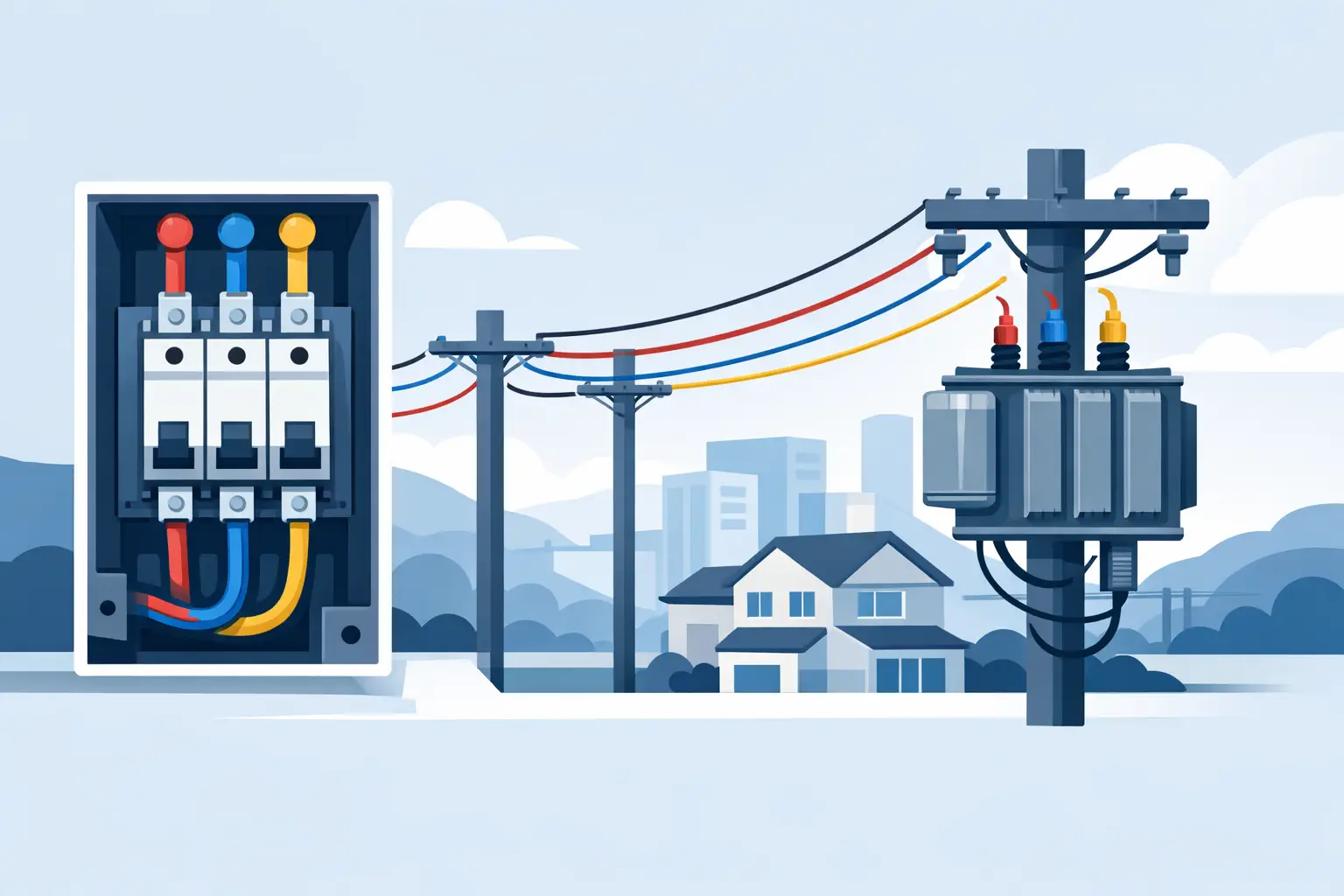
A workshop that keeps tripping when the welder starts, an air conditioner that struggles during peak summer heat, or a business adding heavier machinery can all point to the same issue: the existing electrical supply is no longer suited to the load. A three phase power installation provides a higher-capacity, more balanced supply for properties that need more than standard single-phase power can safely deliver.
For homeowners, landlords and business operators across Ormeau, the Gold Coast and Logan, this is not simply a matter of installing a different outlet. It is a supply upgrade that must be properly assessed, designed and completed by a licensed electrician in line with current Australian requirements and the local network distributor's process.
What is three phase power?
Most homes have single-phase power, which is suitable for everyday lighting, power points and common household appliances. Three-phase power uses three active electrical phases rather than one. This allows power to be distributed more evenly and supports larger loads without placing the same demand on a single circuit or phase.
It does not mean every appliance in the property suddenly receives more power. Standard single-phase circuits can still be installed and used throughout the building. The key benefit is capacity and flexibility at the main supply and switchboard, particularly where the property needs to run high-demand equipment reliably.
Three-phase supply is common in commercial premises, workshops, factories, hospitality venues and larger multi-unit buildings. It is also increasingly relevant for homes with extensive air conditioning, pool equipment, electric vehicle charging, large sheds or serious workshop machinery.
When a three phase power installation makes sense
The right solution depends on the actual load at the property, not just the size of one appliance. A licensed electrician can assess existing circuits, the switchboard, cable capacity and the equipment you intend to run before recommending whether three phase is warranted.
A three phase power installation is often considered where a property has several high-demand items operating at once. This may include ducted air conditioning, electric hot water, a pool pump and heater, induction cooking, an EV charger, solar equipment or a detached workshop. A large home can still operate effectively on single phase if the load is managed well, so an upgrade should be based on calculation and future plans rather than assumption.
For businesses, the case is usually clearer. Equipment such as welders, compressors, commercial refrigeration, hoists, pumps, ovens and manufacturing machinery may require three-phase supply to operate as intended. Installing unsuitable supply arrangements can lead to nuisance tripping, poor equipment performance, overheating or costly rework when the business expands.
If you are fitting out a new tenancy, building a workshop or planning an extension, raise power requirements early. Electrical upgrades are generally simpler and more cost-effective before walls, ceilings and hard landscaping are finished.
What the installation process involves
Every site is different, but the work usually begins with an on-site assessment. The electrician identifies the incoming supply type, existing meter arrangement, condition and capacity of the switchboard, distance to new equipment and likely demand across the property.
Where three-phase supply is available in the street, the network distributor may need to approve and complete changes to the service connection, metering or supply infrastructure. The electrician then coordinates the customer-side electrical work, which can include upgrading the main switchboard, installing suitable protection devices, running appropriately sized cabling and connecting compliant three-phase outlets or fixed equipment.
The switchboard is a critical part of the project. An older board may not have room for additional circuits or may contain outdated components that should be replaced during the upgrade. Modern circuit protection, correctly labelled circuits and a well-organised board make future servicing safer and easier.
Once work is complete, the installation must be tested to confirm correct operation, polarity, earthing, fault protection and phase balance. Required electrical paperwork should also be supplied. This documentation matters for safety, insurance, future property sales and commercial compliance records.
Why load balancing matters
One advantage of three-phase supply is that electrical demand can be spread across three phases. However, this only works when circuits are planned carefully. If too many single-phase circuits are placed on one phase while the other phases carry very little, the system can still become inefficient or overloaded.
A professional installation considers both present demand and likely future additions. For example, a property owner may only install one EV charger today but intend to add solar battery storage or a second charger later. Allowing for those plans at the switchboard can avoid another major alteration in a few years.
For commercial sites, load balancing is particularly important where equipment cycles on and off throughout the day. A practical design supports daily operations without creating avoidable outages or placing unnecessary stress on electrical components.
Costs and factors that affect the quote
There is no reliable one-price answer for a three-phase upgrade. The cost depends on what is already installed and where the new supply or equipment needs to go. A property with available street supply, a modern switchboard and clear cable access will generally be more straightforward than an older building requiring a full board replacement and long underground cable runs.
Key cost factors include the network distributor's connection requirements, meter changes, switchboard upgrades, cable length and size, trenching or difficult access, the number of new circuits, and the type of equipment being connected. Commercial work may also need to be staged around trading hours to minimise disruption.
The cheapest quote is not always the best value when electrical capacity and safety are involved. A clear scope should explain what is included, whether distributor charges are separate, what switchboard work is required and whether the design allows for future growth.
Three phase power for homes, sheds and businesses
For a home, three phase can be a sensible long-term investment when electrical demand is growing. It can provide more options for larger air conditioning systems, electric vehicle charging and workshop equipment while helping to distribute high loads across the property. It is not automatically necessary for every renovation or solar installation, though, so a site assessment remains the right starting point.
For a shed or workshop, the supply must match the machinery. Some equipment is manufactured specifically for three-phase operation and should not be connected through improvised adaptors or altered circuits. Purpose-designed outlets, isolation switches and circuit protection help protect the equipment and the people using it.
For a commercial premises, reliable power supports productivity, customer service and safety. Whether you operate a retail tenancy, warehouse, office, medical practice or trade workshop, the installation should account for operating loads, tenancy requirements, emergency systems and room for expansion.
Do not treat it as a DIY upgrade
Three-phase electrical work carries serious risks. Incorrect connections can damage expensive equipment, create dangerous fault conditions or leave parts of the installation energised when they should be isolated. Work involving switchboards, metering and mains supply also has strict legal and technical requirements in Queensland.
A licensed electrician has the training, test equipment and authority to complete the work correctly. They can also identify related issues that are easy to miss, such as inadequate earthing, undersized consumer mains, deteriorated switchboard components or circuits that no longer meet the needs of the building.
All Phase Electrical can assess three-phase requirements for homes and businesses across Ormeau, the Gold Coast and Logan, then provide a practical scope based on the property, equipment and intended use.
If your property is regularly reaching its electrical limits, plan the upgrade before it becomes an outage, equipment failure or safety concern. The right supply arrangement gives you capacity to operate confidently now and make future improvements without starting again.