When Should Switchboard Be Replaced?
By All Phase Electrical QLD · Published
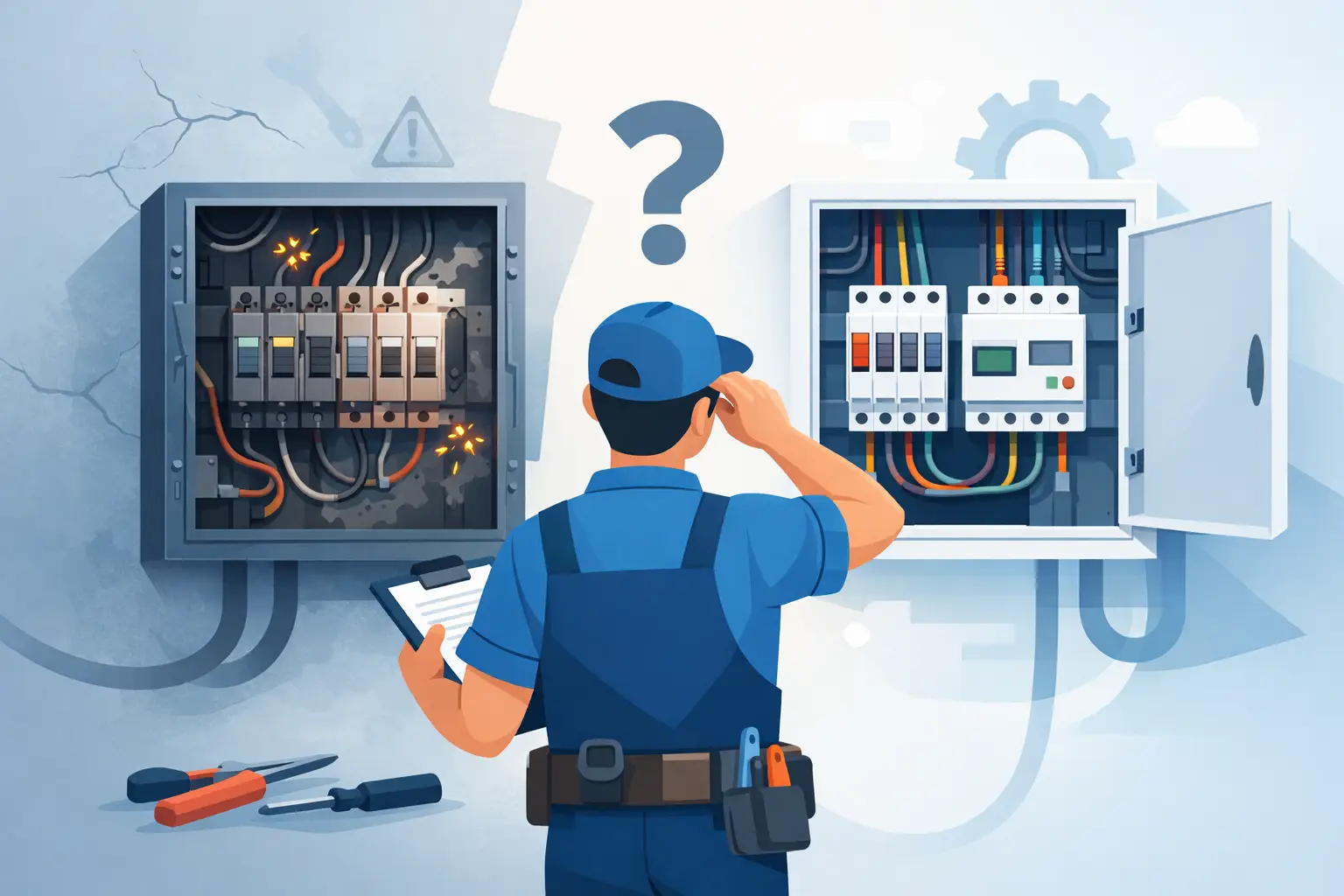
A switchboard usually does not fail all at once. More often, it gives you warning signs first - tripping circuits, flickering lights, a burning smell, or not enough capacity for the way the property is used now. If you are asking when should switchboard be replaced, the answer often comes down to safety, compliance, and whether the existing board still suits the load demands of the premises.
For homes and businesses across Ormeau, the Gold Coast and Logan, this is not a cosmetic upgrade. The switchboard is the control point for your electrical system. If it is outdated, damaged, or undersized, it can put people, appliances and the building itself at risk.
When should switchboard be replaced for safety?
The clearest reason to replace a switchboard is safety. Older boards were built for a very different electrical load than most properties carry today. Air conditioners, induction cooktops, pool equipment, EV chargers, office equipment, CCTV systems and modern appliances all place extra demand on circuits and protection devices.
If the switchboard still relies on old ceramic fuses or lacks modern safety switches, replacement should be considered sooner rather than later. Fuses do provide some protection, but they do not offer the same level of safety as a modern switchboard with correctly installed circuit breakers and RCD protection. In practical terms, that means a modern board is far better at reducing the risk of electric shock and helping to isolate faults quickly.
Heat damage is another serious warning. If you notice discolouration around breakers, a plastic burning smell, buzzing noises, or warmth coming from the board, do not ignore it. These signs can point to loose connections, overloaded circuits or internal failure. At that point, repair may not be enough, especially if the board is old or already showing multiple issues.
Signs your switchboard may be due for replacement
Some warning signs are obvious, while others build gradually over time. Frequent tripping is one of the most common. A single trip now and then does not always mean the whole switchboard needs replacing. It could be an appliance fault or a single overloaded circuit. But if tripping keeps happening across different parts of the property, the board may no longer be coping properly.
Lights that flicker when large appliances start up can also point to an overloaded or ageing system. The same applies if power points or circuits seem unreliable, or if you have had repeated electrical repairs without solving the underlying issue.
Another common sign is simply running out of room. If your switchboard is full and you are planning to add air conditioning, solar, a shed, new kitchen appliances, or extra commercial equipment, replacement may be the better option than trying to patch into an already crowded setup. In some cases, an upgrade is less about a fault and more about bringing the system up to the standard your property now needs.
Older switchboards and modern electrical demand
A lot of properties in older parts of the Gold Coast and Logan were not designed for the number of appliances and systems now used every day. Even a well-kept board can become outdated if it was installed decades ago. That does not automatically mean it is unsafe, but it does mean it should be assessed against current usage and current safety expectations.
This is where there is some nuance. An older switchboard is not always an emergency replacement if it is in sound condition and has appropriate protection. But if it has asbestos backing, outdated fuse protection, signs of deterioration, or no capacity for upgrades, the balance shifts. The older the installation, the more likely it is that replacement is the more practical long-term solution.
For landlords and property investors, this also matters from a risk management point of view. Electrical faults do not just create inconvenience. They can lead to tenant complaints, loss of power, damaged appliances, and potential liability if known issues are left unresolved.
When should switchboard be replaced during renovations or fit-outs?
Renovations are one of the most common times a switchboard replacement makes sense. If you are updating a kitchen, adding a granny flat, fitting out a shop, installing ducted air conditioning, or converting a space to a higher electrical load, the existing board may no longer be suitable.
This is especially relevant when a property is moving from a basic setup to something more energy intensive. New ovens, hot water systems, split systems, data equipment and security systems all add load. If the switchboard does not have enough circuits or the correct protection, the upgrade can become a bottleneck for the whole project.
Doing the switchboard at the same time as other electrical works is often more efficient than waiting for faults to appear later. It allows the electrical system to be planned properly, rather than stretched beyond what it was built to handle.
Compliance, insurance and business risk
For commercial properties, switchboard condition is not just a maintenance issue. It can affect compliance, operational reliability and insurance outcomes. A board that shows obvious damage, poor labelling, outdated protection or non-compliant modifications may create problems during inspections or after an electrical incident.
Businesses also have less tolerance for downtime. If a switchboard fault shuts down lighting, refrigeration, office systems or point-of-sale equipment, the cost goes beyond the repair itself. Lost trade, staff disruption and spoiled stock can add up quickly. In those settings, replacing an ageing or unreliable switchboard can be a sensible preventative decision.
For homeowners, insurance concerns can arise too. While every policy is different, insurers generally expect electrical systems to be maintained in safe working order. If a known defect is ignored and later contributes to damage, that can complicate matters.
Repair or replace?
Not every switchboard issue means full replacement is required. Sometimes the problem is a faulty breaker, a loose connection, damaged wiring on one circuit, or another isolated defect that can be repaired safely. A licensed electrician should inspect the board and advise based on its condition, age, protection devices and capacity.
The key question is whether a repair solves the actual problem or just delays a bigger one. If the board is already outdated, overloaded or showing multiple faults, repeated repairs can become poor value. You may spend money fixing symptoms while the core issue remains.
Replacement is usually the stronger option when the board has old fuse technology, visible damage, asbestos components, insufficient space for new circuits, or a history of recurring problems. It is also the better option when you want a system that supports future electrical additions without constant compromise.
What a switchboard upgrade typically achieves
A properly designed switchboard replacement improves safety, reliability and usability. It can provide modern circuit protection, safety switches where required, clearer labelling, better organisation of circuits and capacity for future additions.
That matters in day-to-day use. Faults are easier to isolate, circuits are easier to identify, and the system is generally better equipped to handle the way the property is actually used. For businesses and larger homes, that can make maintenance simpler and reduce unnecessary disruptions.
For many customers, the biggest benefit is confidence. You know the electrical heart of the property has been assessed and updated by a licensed electrician rather than left as an ageing weak point.
The right time to act
If there are warning signs, the right time is before a failure forces the issue. Waiting until the power cuts out, the board overheats, or a major appliance installation cannot go ahead usually leads to more stress and less flexibility.
A professional inspection can tell you whether your current switchboard is safe to keep, suitable for upgrade works, or due for replacement now. For property owners in Ormeau, the Gold Coast and Logan, that advice is best coming from a licensed local electrician who understands both the technical requirements and the demands common to homes and commercial sites in the area.
All Phase Electrical handles switchboard upgrades as part of broader residential and commercial electrical work, which means the advice is based on the full picture - safety, load requirements, compliance and how the site is actually used. If your board is showing its age, asking the question early is usually the smartest move.