Why Do Circuit Breakers Trip at Home?
By All Phase Electrical QLD · Published
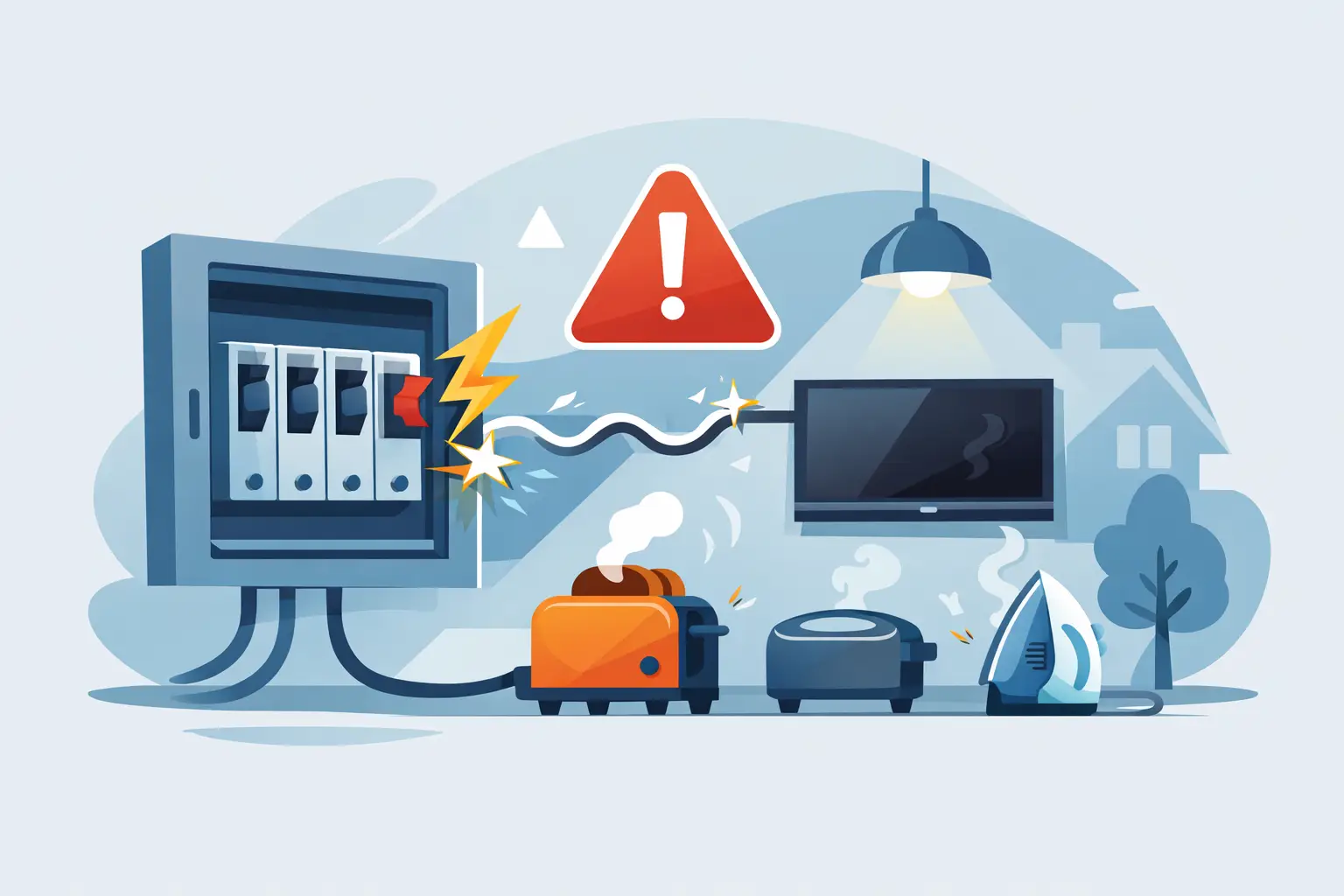
A breaker that trips once during a storm or when too many appliances are running can be frustrating. A breaker that keeps tripping is a fault warning, not just an inconvenience. If you have been asking why do circuit breakers trip, the short answer is that they are designed to shut power off when a circuit becomes unsafe.
That shutdown protects your wiring, appliances, switchboard and, most importantly, the people using the property. In homes and businesses across Ormeau, the Gold Coast and Logan, repeated tripping is usually tied to overloads, short circuits, earth faults, failing appliances or problems within the switchboard itself. The right response depends on which of those is actually happening.
Why do circuit breakers trip in the first place?
A circuit breaker is a safety device. Its job is to interrupt power when current flow moves outside safe limits for that circuit. Rather than allowing cables to overheat or equipment to continue operating under fault conditions, the breaker trips and cuts supply.
That means the breaker is often doing exactly what it should. The problem is not always the breaker. In many cases, the breaker is reacting to another issue somewhere on the circuit.
In a residential property, that may be a kitchen circuit carrying too much load, a damaged power point, or an appliance with an internal fault. In a commercial setting, it could be a faulty piece of equipment, overloaded general power circuit, deteriorated cabling, or a switchboard issue that needs proper fault finding.
The most common reasons circuit breakers trip
Circuit overload
This is one of the most common causes, especially in homes. An overload happens when too many devices draw power from the same circuit at the same time. Think kettles, toasters, microwaves, portable heaters or air fryers all running together. Individually, each appliance may be fine. Together, they can exceed what that circuit is rated to handle.
When that happens, the breaker trips to stop the wiring from overheating. If the breaker resets and holds once some appliances are unplugged, overload is a likely cause.
Overload faults are common in older properties where modern appliance demand is much higher than what the original circuit layout was designed for. They are also common in offices or shops where extra equipment has been added over time without reviewing the load across the board.
Short circuit
A short circuit is more serious. It happens when active and neutral conductors come into direct contact, creating a sudden surge in current. That surge causes the breaker to trip very quickly.
Short circuits can be caused by damaged cabling, loose connections, failed switches, faulty power points or an appliance with internal damage. Sometimes there are visible signs such as a burnt smell, blackening around an outlet, or a breaker that trips the moment it is reset. Sometimes there are no obvious signs at all.
This type of fault needs to be treated seriously because it can create heat and arcing inside the electrical system.
Earth fault or safety switch activity
People often refer to all tripping as a breaker issue, but sometimes it is a safety switch, also called an RCD, that is actually operating. A safety switch trips when it detects current leaking to earth. Its purpose is personal protection against electric shock.
An earth fault may come from a damaged appliance, moisture entering a fitting, deteriorated wiring insulation, or an outdoor circuit exposed to weather. If a switchboard device trips as soon as a particular appliance is plugged in, that appliance is a strong suspect.
The important point is this: a breaker protects wiring from overcurrent, while a safety switch protects people from electric shock. Both are critical, and both can indicate a fault that should not be ignored.
Faulty appliances
Sometimes the problem is not in the fixed wiring at all. A fridge, dishwasher, washing machine, dryer, microwave, air conditioner or office equipment can develop an internal fault and start tripping the circuit.
This is why patterns matter. If the breaker trips only when one appliance runs, that appliance may be the trigger. If the breaker trips randomly with nothing obvious connected, the fault may be in the circuit itself, the switchboard, or hidden wiring.
Appliance faults are particularly common with older equipment, units exposed to water, or gear that has been moved, knocked, or used heavily for years.
Faulty breaker or switchboard problems
Breakers do wear out. While they are built to protect circuits, they are still components inside a working switchboard and can fail over time. Loose connections, heat damage, ageing switchboards and poor previous electrical work can all contribute to nuisance tripping or unsafe conditions.
In some cases, the breaker is tripping correctly because the switchboard is no longer suitable for the current electrical demand of the property. That is often seen in older homes that now run multiple air conditioners, induction cooking, larger hot water systems and more general power use than the original installation expected.
When a tripping breaker points to a larger issue
Not every trip means an emergency, but repeated tripping should always be taken seriously. If a breaker trips once after you overload a circuit, the fix may be as simple as reducing the load. If it keeps happening, there is usually a fault that needs testing.
Persistent tripping can point to damaged cable insulation, poor terminations, moisture ingress, deteriorating switchboard components, or circuits that need upgrading. In investment properties and commercial sites, recurring trips can also create downtime, tenant complaints and safety risks that are better dealt with early rather than after a full failure.
There is also a practical point here. Resetting the breaker again and again does not solve the fault. It can delay proper diagnosis while the underlying issue worsens.
What you can check safely before calling an electrician
If a breaker trips, start with the basics. Turn off and unplug portable appliances on the affected circuit if it is safe to do so. Reset the breaker once. If it holds, reconnect appliances one at a time to see whether one item causes the trip.
You can also note whether the fault happens at certain times, such as when the oven heats up, the air conditioner starts, or outdoor lighting runs after rain. That information can help with fault finding.
What you should not do is open outlets, remove switchboard covers, or keep forcing a breaker back on if it trips immediately. If there is any burning smell, visible damage, buzzing, heat at the board, or signs of water around fittings, leave it off and arrange a licensed electrician.
Why do circuit breakers trip more often in older properties?
Older properties often have two issues at once. First, the electrical system may have been designed around lower everyday demand. Second, age itself affects cabling, fittings and switchboard components.
Over time, insulation can deteriorate, terminations can loosen, and additions or alterations may leave circuits carrying more than they should. Even if the property has worked for years, adding a new air conditioner, cooktop, EV charger, workshop equipment or upgraded office gear can expose limits that were already there.
That is why recurring trips in older homes and buildings should not be treated as normal. They often indicate the need for testing, repairs or a switchboard upgrade rather than another reset.
When to call a licensed electrician
If the breaker trips repeatedly, trips instantly when reset, affects essential circuits, or is linked to heat, smell, sparks or visible damage, it is time to call a licensed electrician. The same applies if a safety switch will not stay on, or if the fault involves outdoor wiring, wet areas, hot water, air conditioning or commercial equipment.
Electrical fault finding is not guesswork. A qualified electrician can test the circuit, isolate whether the issue is load-related or fault-related, inspect the switchboard, check connected appliances, and identify whether the fix is a repair, replacement, or upgrade. For properties around Ormeau, the Gold Coast and Logan, that local response matters when the problem is affecting daily use or business operations.
At All Phase Electrical, this kind of work is approached the way it should be - safely, methodically and with licensed fault diagnosis rather than quick assumptions.
The cost of ignoring a tripping breaker
A tripping breaker is easy to dismiss when power comes back after a reset. The risk is that repeated tripping can be the early warning sign of overheating conductors, damaged insulation, moisture-related faults or failing equipment.
Ignoring it can lead to bigger repairs, appliance damage, repeated loss of power, and avoidable safety issues. For landlords and business operators, it can also become a compliance and liability concern if known faults are left unresolved.
The most useful way to think about breaker tripping is this: the power is not failing at random. The protection device is responding to something. Once that starts happening more than once, the smart move is to find the real cause rather than work around it.
If your breaker has started tripping and you are not sure whether it is an overload, an appliance issue or a wiring fault, treat it as a sign to have the circuit checked properly. A clear diagnosis now is usually faster, safer and less expensive than waiting for the next trip to become a bigger electrical problem.