CCTV or Alarm System for Your Gold Coast Property
By All Phase Electrical QLD · Published · Updated
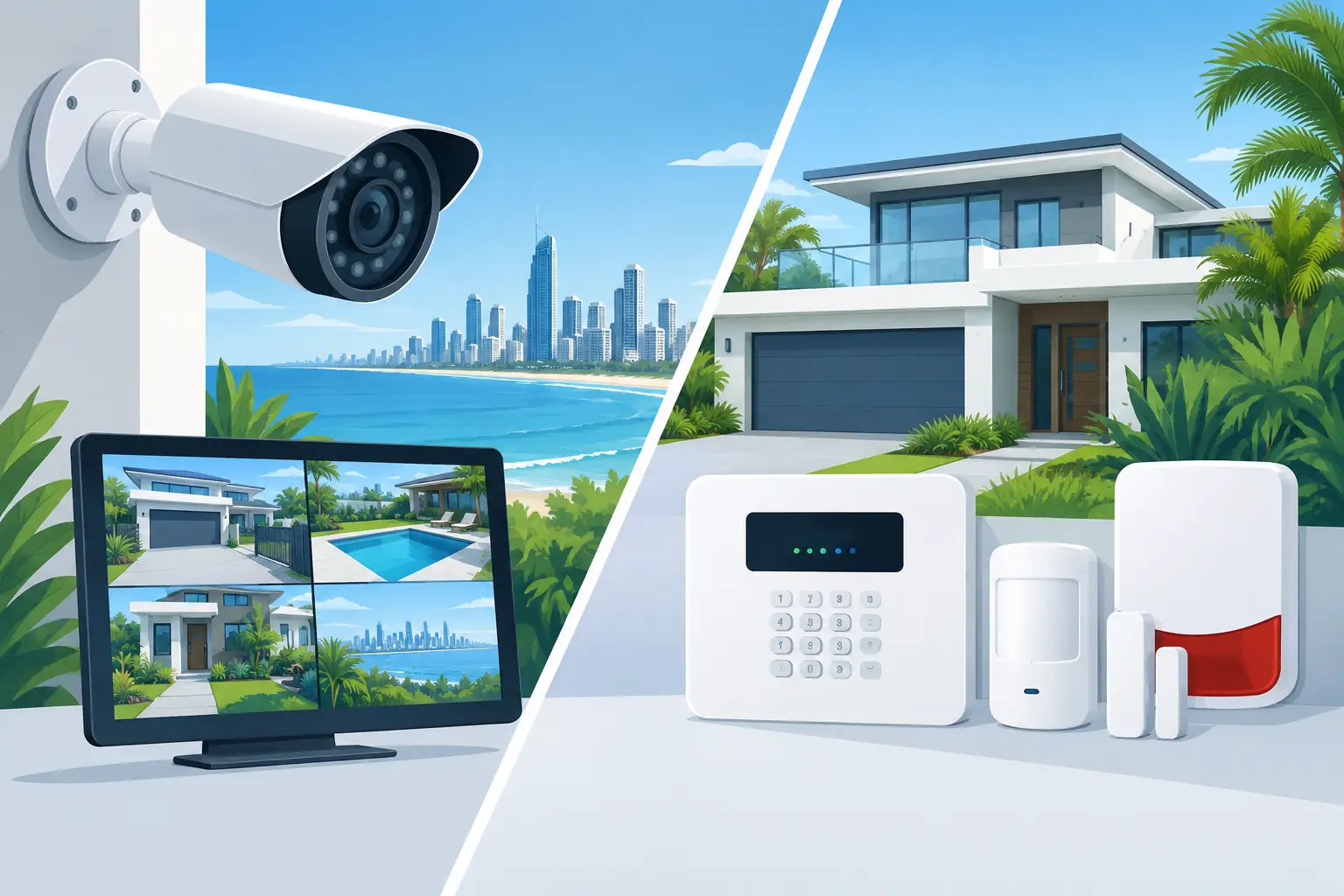
A break-in rarely gives a property owner a convenient warning. Whether you are protecting a family home in Ormeau, a rental property in Logan or a small business on the Gold Coast, choosing a CCTV or alarm system comes down to one practical question: do you need to see what happens, be alerted when it happens, or both?
The right answer depends on the property, the risks you are managing and how quickly someone can respond. Cameras and alarms serve different purposes, and one is not automatically better than the other. A well-planned security system considers entry points, visibility, daily use and the reliability of the electrical installation behind it.
CCTV or alarm system: what is the key difference?
CCTV is primarily about visibility and evidence. Cameras monitor selected areas and record footage that can be reviewed after an incident. Many modern systems also allow live viewing from a mobile, motion alerts and remote playback. A visible camera can discourage opportunistic behaviour before a person reaches the door, gate or loading area.
An alarm system is built for immediate notification. It uses sensors on doors, windows and internal spaces to detect unauthorised access, then activates a siren, sends an alert or communicates with a monitoring service, depending on the system selected. Its main job is to make an intrusion difficult to ignore and prompt a quick response.
Put simply, CCTV helps you identify what occurred. An alarm helps make sure you know an event is occurring. For many homes and commercial premises, the strongest arrangement combines the two.
When CCTV is the better first investment
CCTV can be the sensible first step where oversight is the main concern. Homeowners often choose cameras to monitor driveways, front entries, side access and rear yards. They can confirm deliveries, help check on trades attending a property and provide useful footage if a vehicle, gate or external area is damaged.
For landlords and property investors, cameras can be particularly useful around common access points, car parks and building entrances where permitted and appropriately positioned. Footage may assist with investigating vandalism or unauthorised access, although cameras should never be installed where they intrude on tenants' private areas.
Small businesses may benefit from CCTV at entrances, point-of-sale areas, stock rooms, workshops and external loading zones. The value is not limited to theft prevention. Clear footage can help investigate incidents, resolve disputes and understand after-hours activity around the premises.
CCTV is most effective when camera locations are planned properly. A camera placed too high may show that someone was present but fail to capture useful facial detail. Poor lighting, glare from the afternoon sun, branches moving in front of the lens and weak Wi-Fi coverage can all reduce performance. Camera quality matters, but placement and installation matter just as much.
When an alarm system should take priority
An alarm system is often the better option where a fast alert is more valuable than recorded footage. This may apply to a business that is closed overnight, a home that is vacant for extended periods or a property storing tools, equipment or stock that can be removed quickly.
Door and window sensors identify an entry attempt at the perimeter. Internal motion detectors add another layer if someone gains access. When the alarm is armed, a siren can draw attention to the incident and alerts can be sent to nominated contacts. Some systems can also be connected to professional monitoring, which may suit higher-risk sites or owners who travel regularly.
Alarms require a little more routine from the people using them. Residents, staff or tenants need to understand how to arm and disarm the system, and access codes need to be managed when people leave a household or business. A system that is constantly triggering false alarms will quickly be ignored, so sensor selection, programming and user training are essential.
For premises with pets, regular staff movement or multiple entry doors, the design needs to reflect how the building is actually used. The goal is dependable detection without creating daily frustration.
Why many properties need both
If your budget permits, a combined system provides a more complete security response. The alarm creates urgency. CCTV gives you a way to verify an alert and review the event afterwards. If a sensor activates while you are away, footage can help you assess whether it is a genuine concern, a delivery, an animal or another non-security issue.
This combination is valuable for detached homes with side access, acreage properties, workshops, retail premises and offices with valuable equipment. It also suits businesses where managers need visibility across several areas but cannot physically attend every alert immediately.
Integration can make daily use easier. Depending on the equipment chosen, cameras may record or send a notification when an alarm zone is triggered. However, avoid selecting security equipment based only on app features. A feature-rich system will not compensate for poor sensor locations, cameras aimed in the wrong direction or unreliable power and network connections.
Factors to consider before choosing a system
Start by walking around the property at the times it is most vulnerable. For a home, this may be after dark or while the household is at work and school. For a business, it may be after closing, during weekend periods or when deliveries arrive. Look for concealed side paths, low fences, poorly lit doors, accessible windows and areas where equipment is stored.
Think about the outcome you need. If you want to know who entered the driveway or whether a parcel has arrived, CCTV may meet the need. If you need immediate notification when a door is forced, an alarm should be the priority. If you need both verification and rapid warning, plan for an integrated approach.
You should also consider power, communications and maintenance. Security equipment needs stable power and should be installed to maintain a neat, reliable result. Wireless products can be useful in some locations, but they still require battery checks, network coverage and careful placement. Hardwired options may be better suited to certain buildings, renovations or new construction work.
Privacy is another practical consideration. Cameras should focus on your property and legitimate security areas, not neighbouring yards, windows or private spaces. Businesses should be clear with staff and visitors where surveillance is operating, particularly in workplaces and customer-facing areas.
Installation quality affects security performance
A security system is only as useful as its installation. Cameras need secure mounting, suitable viewing angles and protection from weather exposure. Alarm sensors need correct positioning and adjustment. Cabling, power supplies and network equipment should be installed safely and professionally rather than treated as an afterthought.
This is where using a licensed electrical contractor makes sense. Security installations often involve power connections, cable routes, roof spaces, external mounting points and integration with other electrical work. A qualified installer can assess the site, recommend practical equipment locations and complete the work with the broader electrical safety of the property in mind.
It is also worth planning security alongside outdoor lighting, switchboard upgrades, renovations or new fit-outs. A motion-activated light near an entry point can improve camera footage and make access less appealing. Completing related work together can reduce disruption and avoid having to reopen walls, ceilings or pathways later.
Choosing the right level of protection
There is no single answer to the CCTV or alarm system question. A small unit with one clearly visible entry may be well served by a camera and good lighting. A family home with several access points may benefit from cameras and an alarm. A workshop, office or retail site with stock and after-hours exposure may need a more comprehensive design, potentially with monitoring.
The best starting point is a site-specific assessment rather than a boxed package chosen online. Consider what you need to protect, how the premises operates and what should happen when an incident is detected. All Phase Electrical can help property owners across Ormeau, the Gold Coast and Logan plan a security installation that fits the site, the risk and the way the property is used.
A properly chosen system should not add complexity to your day. It should give you clear visibility, timely warning and greater confidence when you lock up and leave.