Electrical Upgrades for Older Homes That Matter
By All Phase Electrical QLD · Published · Updated
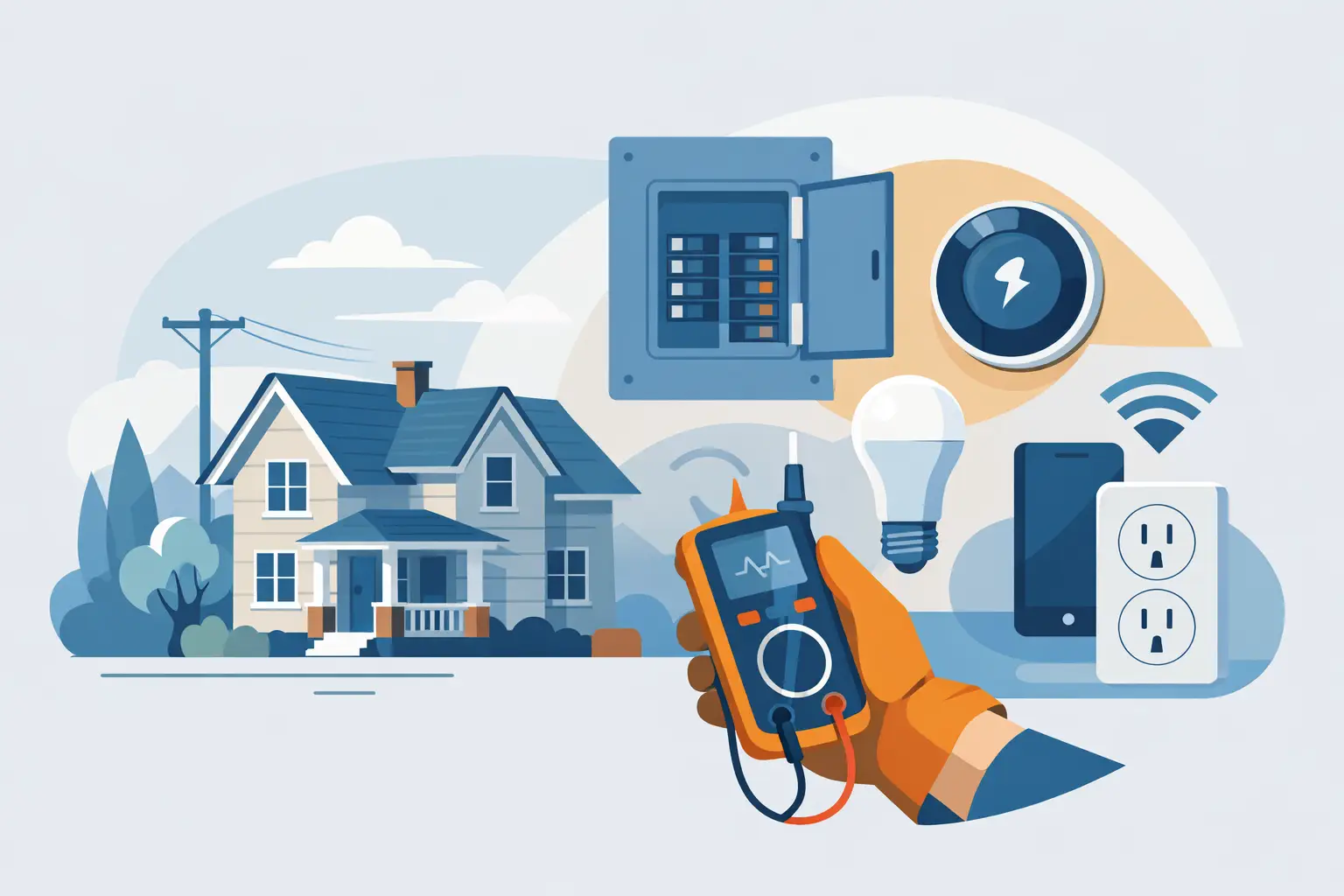
A home can look beautifully maintained while its electrical system is working well beyond the demands it was designed for. Electrical upgrades for older homes are often prompted by nuisance tripping, a planned renovation or the need for more power points, but the larger issue is usually safety and capacity. Older Gold Coast and Logan homes were not built around induction cooktops, split-system air conditioning, home offices, EV charging and a household full of devices.
A licensed electrician can assess what is behind the walls, identify immediate risks and recommend an upgrade plan that suits the property, budget and future plans. The right answer is rarely to replace everything at once. It is to address the work that makes the home safer and more practical first, then stage other improvements properly.
Start with an electrical safety assessment
The age of a house is a useful clue, but it does not tell the whole story. A 1960s home may have had a quality switchboard and wiring upgrade recently, while a newer property may have been altered poorly over time. An assessment gives you a clear picture of the condition and capacity of the existing installation before decisions are made around renovations, appliances or air conditioning.
A licensed electrician will inspect the switchboard, wiring where accessible, earthing, safety switches, outlets, light fittings and major circuits. They can also look for signs of previous non-compliant work, overloaded circuits and equipment that no longer meets current requirements when altered or replaced.
This is particularly worthwhile before buying an older property, undertaking a kitchen renovation or converting a garage, shed or spare room into a working space. Finding electrical limitations before walls, tiles and cabinetry are installed is simpler and more cost-effective than reopening finished areas later.
Warning signs older wiring needs attention
Some faults are obvious. Others are easy to dismiss because the power still works. Electrical problems should not be treated as a maintenance job for a homeowner, especially where older wiring, a fuse board or repeated faults are involved.
Arrange an inspection if you notice four or more of these common signs:
- Circuit breakers or fuses operate regularly, particularly when using ordinary appliances.
- Power points, switches or plugs feel warm, crackle, spark or show discolouration.
- Lights flicker or dim when an appliance starts, such as an air conditioner or microwave.
- Extension leads and power boards have become a permanent way to supply rooms.
- There are few power points in kitchens, bedrooms or living areas for how the home is now used.
- The switchboard has old ceramic fuses, no clearly labelled circuits or no visible safety switches.
- You can smell burning insulation, notice a buzzing sound or receive an electric tingle from an appliance or tap.
A burning smell, sparking, electric shock or persistent loss of power requires prompt action. Turn off power at the main switch only if it is safe to do so, avoid touching damaged equipment and contact a licensed electrician for urgent assistance.
Switchboard upgrades are often the priority
For many properties, the switchboard is the most valuable place to begin. It is the control point for circuit protection and may be inadequate for modern household loads. Older boards can contain rewireable ceramic fuses, ageing breakers, crowded wiring or limited room for additional circuits.
A modern switchboard upgrade can provide correctly rated circuit breakers, safety switches and clear circuit identification. It also creates capacity for new dedicated circuits, including air conditioning, ovens, pool equipment, solar systems, electric hot water or an EV charger. The precise configuration depends on the property and the equipment installed, not a standard package.
Safety switches, also called RCDs, are designed to disconnect power quickly when they detect certain electrical leakage faults. They are a key protection measure, but they do not make damaged wiring safe or replace proper earthing. If a safety switch trips repeatedly, resetting it without investigating the cause can leave an underlying fault unresolved.
When a switchboard is upgraded, associated work may be required to bring the altered installation into line with current Australian standards. That can affect the final scope and cost, which is why an on-site inspection and written explanation of priorities matter.
Plan circuits around how the home is used now
An older house may have one circuit covering several bedrooms and the living area, or a kitchen circuit that was never intended to run multiple benchtop appliances. Adding extra outlets to an overloaded existing circuit is not always the right solution. In many cases, a new circuit is needed to improve capacity and reduce the likelihood of nuisance tripping.
Kitchens are a common focus. Modern families use kettles, coffee machines, air fryers, dishwashers and microwaves at the same time, often alongside electric cooking appliances. A renovation is the ideal opportunity to install adequate power points in practical locations and make sure high-demand appliances have suitable dedicated circuits.
Air conditioning also needs proper planning. A split-system unit is not simply another appliance to plug in. The electrical supply, isolation, circuit protection and installation requirements must suit the unit and site. If you are adding several systems across an older home, the switchboard capacity should be checked before installation begins.
Home offices, outdoor entertaining areas, sheds and pools deserve the same consideration. A safe, compliant circuit is preferable to running extension leads through doorways, across footpaths or from an overloaded internal outlet. For property investors and landlords, this is also a practical way to improve tenant usability while reducing avoidable electrical risks.
Rewiring may be necessary, but not always everywhere
The word “rewire” can sound like a complete strip-out, and sometimes a full rewire is justified. Homes with deteriorated insulation, very old cable types, damaged conductors, unprotected wiring or major renovation works may need substantial replacement to be safe and compliant.
However, not every older home needs every cable replaced immediately. The scope depends on the condition of the wiring, whether it is accessible, the result of testing, previous upgrades and what work is planned. Targeted rewiring may be appropriate where a kitchen, bathroom, extension or switchboard is being renovated, while the balance of the home is monitored or scheduled for later work.
Access is often the major trade-off. Homes with underfloor space or a usable roof cavity can be easier to rewire than homes built on slabs with enclosed ceilings and finished walls. A good electrician will explain where repairs can be completed with minimal disruption and where patching, repainting or coordination with other trades may be required.
Do not overlook earthing, smoke alarms and outdoor areas
Electrical upgrades for older homes should account for the safety systems around the wiring, not only new fittings and outlets. Effective earthing helps provide a path for fault current and supports protective devices. Older properties can have inadequate earthing arrangements, particularly after piecemeal additions or renovations.
Smoke alarms should also be checked as part of any broader electrical work. Queensland has specific smoke alarm requirements that apply to homes and rental properties, including installation, interconnection and replacement obligations in relevant circumstances. An electrician can assess the existing arrangement and advise what is required for the property.
Outdoor electrical work needs careful attention in the Gold Coast and Logan climate. Moisture, UV exposure, corrosion and water around pools or entertaining spaces all influence product selection and installation methods. Weatherproof outlets, suitable lighting, correctly installed pool equipment and tested safety protection are essential. Decorative garden lighting or a new patio fan may appear straightforward, but outdoor electrical work still needs to be installed by a licensed professional.
Budget by risk, not by appearance
If a full upgrade is not practical immediately, start with the work that addresses danger or clear non-compliance. Faulty wiring, damaged outlets, poor earthing, exposed live parts and switchboard deficiencies take priority over additional feature lighting or extra USB outlets.
The next stage is usually capacity: dedicated circuits for major appliances, more usable power points and provision for planned air conditioning, solar or EV charging. Cosmetic electrical improvements can then be coordinated with renovations. This staged approach avoids paying twice for work and allows the electrical system to grow with the property.
Quotes should clearly set out what is included, what has been observed, what may only be confirmed once access is available and whether any repair work is urgent. Be cautious of low-cost proposals that do not discuss testing, protection devices, circuit capacity or certification. Electrical work is safety-critical, and the cheapest option can become expensive when it has to be corrected.
Use a licensed local electrician
In Queensland, electrical work must be carried out by appropriately licensed people. This protects occupants and helps ensure work is tested, certified where required and completed to the relevant standards. It also means the electrician can identify when one small job reveals a larger issue that should be addressed before it becomes an emergency.
For homeowners, landlords and property managers across Ormeau, the Gold Coast and Logan, All Phase Electrical can assess older installations, complete switchboard upgrades and plan practical electrical improvements around the way a property is used. The most useful first step is not choosing fittings or guessing at costs. It is having the existing system checked by a licensed electrician, so every upgrade that follows is built on a safe foundation.