Hard Wired Versus Battery Smoke Alarms
By All Phase Electrical QLD · Published
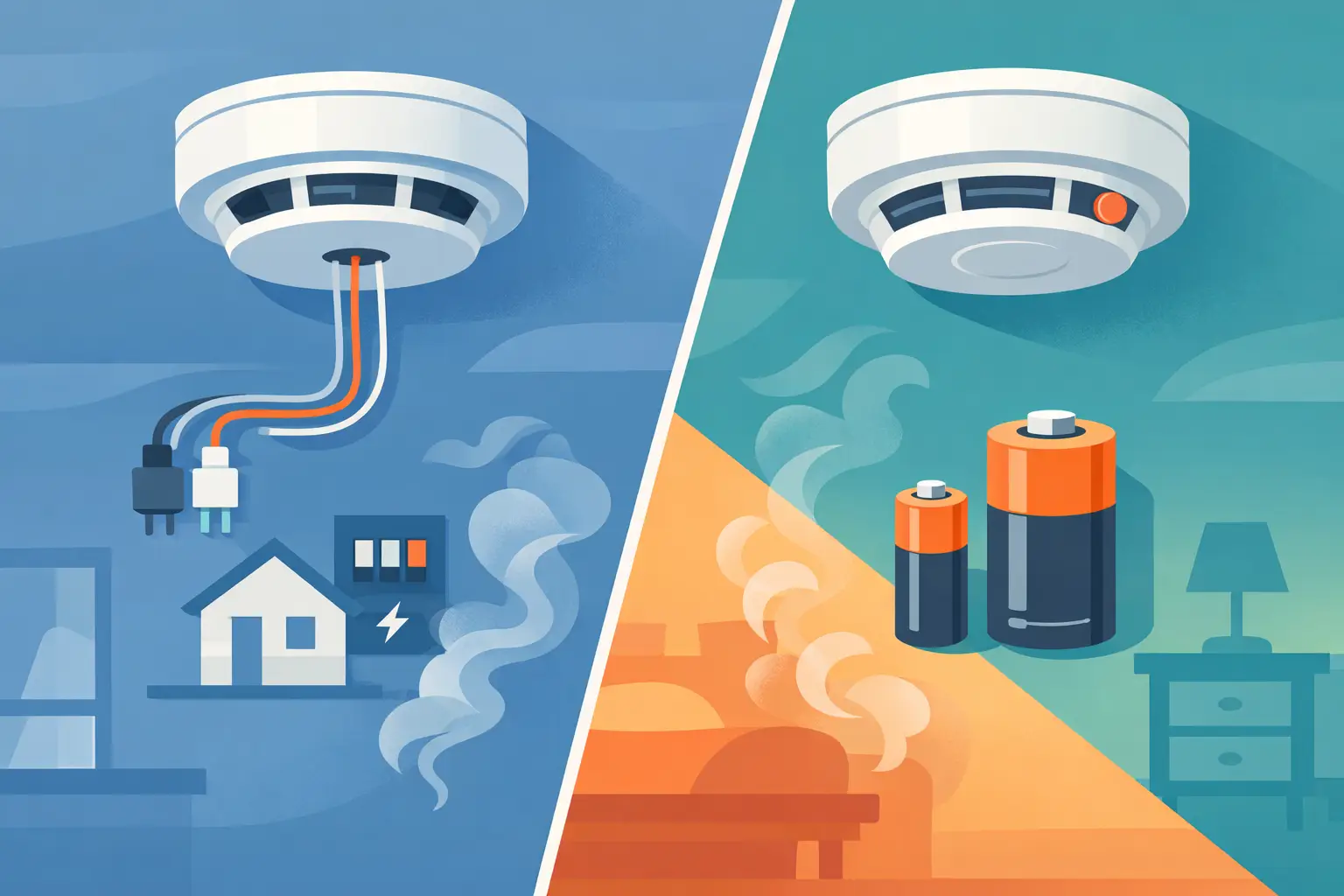
If you are weighing up hard wired versus battery smoke alarms, the right choice is not just about price at the hardware store. It affects reliability, maintenance, compliance and how quickly your household is alerted when there is smoke in the home. For owners, landlords and property managers across the Gold Coast and Logan, that decision has real safety and legal consequences.
Smoke alarms are one of those fittings people tend to forget until they chirp at 2 am or fail an inspection. But a smoke alarm system only helps if it is installed correctly, powered reliably and suited to the property. That is where the difference between battery-operated and hard wired models matters.
Hard wired versus battery smoke alarms: what is the difference?
A battery smoke alarm is a standalone unit powered by an internal battery. Depending on the model, that may be a replaceable battery or a sealed long-life battery designed to last for years. These alarms are common in older homes, smaller dwellings and situations where a quick replacement is needed without running new cabling.
A hard wired smoke alarm is connected to the property’s electrical system. Most modern hard wired units also include a battery backup, so they continue operating during a power outage. In many homes, these alarms can be interconnected, which means if one alarm detects smoke, all alarms sound together.
That interconnected feature is a major difference. In a larger home, a detached sleeper at the far end of the house may not hear a single alarm in another room. With interconnected hard wired alarms, everyone gets the warning at the same time.
Why hard wired smoke alarms are often the stronger option
From a safety point of view, hard wired alarms usually offer the more dependable setup. They draw power from the mains, so there is less chance of the alarm being out of action because someone forgot to replace a battery. The backup battery is there for blackouts, not as the primary power source.
That matters in busy households and rental properties where routine maintenance can be missed. A battery alarm may be simple to install, but it also relies more heavily on human follow-through. If the battery is flat, removed or ignored, the alarm may not protect anyone.
Hard wired alarms are also well suited to modern compliance requirements, especially where interconnected alarms are needed. In newer builds, major renovations and many upgrade situations, hard wired systems are often the practical and preferred solution. They give a cleaner, more permanent result and can be integrated properly across the property.
There is a cost difference, of course. Hard wired alarms are more expensive to install because a licensed electrician is required and cabling may need to be run through the ceiling space. In an existing home, the layout of the property can affect the labour involved. But for many owners, that upfront cost is worth it for better reliability and lower day-to-day hassle.
Where battery smoke alarms still make sense
Battery smoke alarms are not automatically the wrong choice. In some properties, they are the sensible option.
If you have an older home where access is difficult, or you need to add protection quickly in a location that is not easily wired, a quality battery-powered alarm can be an effective interim or long-term solution, depending on the legal requirements for that property. Sealed 10-year battery models are a better option than older replaceable battery units because they reduce tampering and cut down on maintenance.
Battery alarms can also suit smaller dwellings where interconnection is less critical, although that depends on the floor plan. A compact unit might not need the same level of system design as a large family home or multi-room investment property.
The trade-off is consistency. Battery alarms are only as reliable as the battery condition, the installation location and the ongoing checks. They can do the job well, but they leave more room for neglect.
Compliance is not the same for every property
This is where many property owners come unstuck. The answer to hard wired versus battery smoke alarms is not purely a matter of preference. Queensland smoke alarm legislation sets clear requirements, and those requirements vary depending on the age of the property, whether it is owner-occupied or rented, and whether building work has been carried out.
In many cases, alarms must be photoelectric, compliant with Australian Standards, installed in prescribed locations and interconnected. For new homes and substantially renovated homes, hard wired alarms are generally required where there is access to mains power. Rental properties also have strict obligations, and landlords cannot assume an older battery alarm arrangement still meets the current rules.
This is why it pays to have the property assessed properly. A home built years ago may have once met the standard and still be below current expectations. A rental property may need an upgrade before a new tenancy. A commercial premises or mixed-use site may have different obligations again.
For owners and managers, the risk is not only safety. Non-compliant alarms can create problems during tenancy changes, property sales, insurance claims and routine inspections.
Installation quality matters as much as alarm type
Even the best alarm will underperform if it is installed in the wrong spot. Smoke alarms should not be placed wherever there is a convenient ceiling surface. Ceiling fans, air conditioning outlets, dead air spaces near corners and certain kitchen-adjacent positions can all affect performance or lead to nuisance alarms.
That is one reason professionally installed hard wired alarms are often the better result. A licensed electrician can assess the layout, determine suitable locations, confirm interconnection requirements and make sure the alarms are correctly fitted and tested.
With battery alarms, DIY installation is common, but mistakes are also common. Units end up too close to bathrooms, too near cooking zones or in positions that do not give occupants enough warning time. The alarm may technically work, but not as effectively as it should when it counts.
Which option is better for landlords and property investors?
For landlords, dependability usually outweighs the lower upfront cost of battery units. Rental properties need smoke alarms that are harder to tamper with, easier to maintain and more likely to meet the current legal standard. Hard wired interconnected alarms with battery backup are often the safer long-term investment.
They can also reduce recurring callouts for battery issues and help simplify compliance management. If you manage multiple properties, a consistent alarm setup makes servicing and record-keeping easier.
That said, not every property can be upgraded the same way in one visit. Some homes need staged works depending on access, age and switchboard condition. A qualified electrician can advise whether a full hard wired upgrade is practical immediately or whether another compliant pathway is more suitable.
Hard wired versus battery smoke alarms for homeowners
For owner-occupiers, the decision often comes down to how long you plan to stay in the home and whether you want the best available protection or the cheapest short-term fix.
If you are renovating, upgrading the switchboard, or carrying out other electrical work, that is usually the right time to install hard wired interconnected smoke alarms. The work is more efficient when done alongside other electrical upgrades, and the finished system is more reliable.
If your budget is tight and the property layout is simple, a compliant battery model may cover your immediate needs. But if the goal is lasting safety with less maintenance, hard wired alarms are generally the stronger choice.
The practical answer for most properties
When clients ask which is better, the practical answer is this: if your property can support hard wired interconnected smoke alarms and the budget allows for proper installation, that is usually the preferred option. It gives stronger reliability, better whole-home warning and a setup that aligns more closely with modern safety expectations.
Battery smoke alarms still have a place, especially in specific retrofit situations, but they are more dependent on upkeep and are not always the best long-term fit.
The right decision comes from the property itself - its age, layout, existing wiring, legal obligations and who lives there. A small home, a rental unit and a large family house will not always need the same approach.
If you are unsure, get the alarms checked before you rely on them. Smoke alarm compliance and installation is not an area where guesswork helps. A properly assessed and properly installed system gives you something more useful than a cheap alarm on the ceiling - real warning when seconds matter.
If your smoke alarms are outdated, unreliable or not clearly compliant, now is a good time to sort it properly rather than waiting for a chirp, a tenancy deadline or an emergency to force the issue.