Why Aircon Trips and What the Fault May Be
By All Phase Electrical QLD · Published · Updated
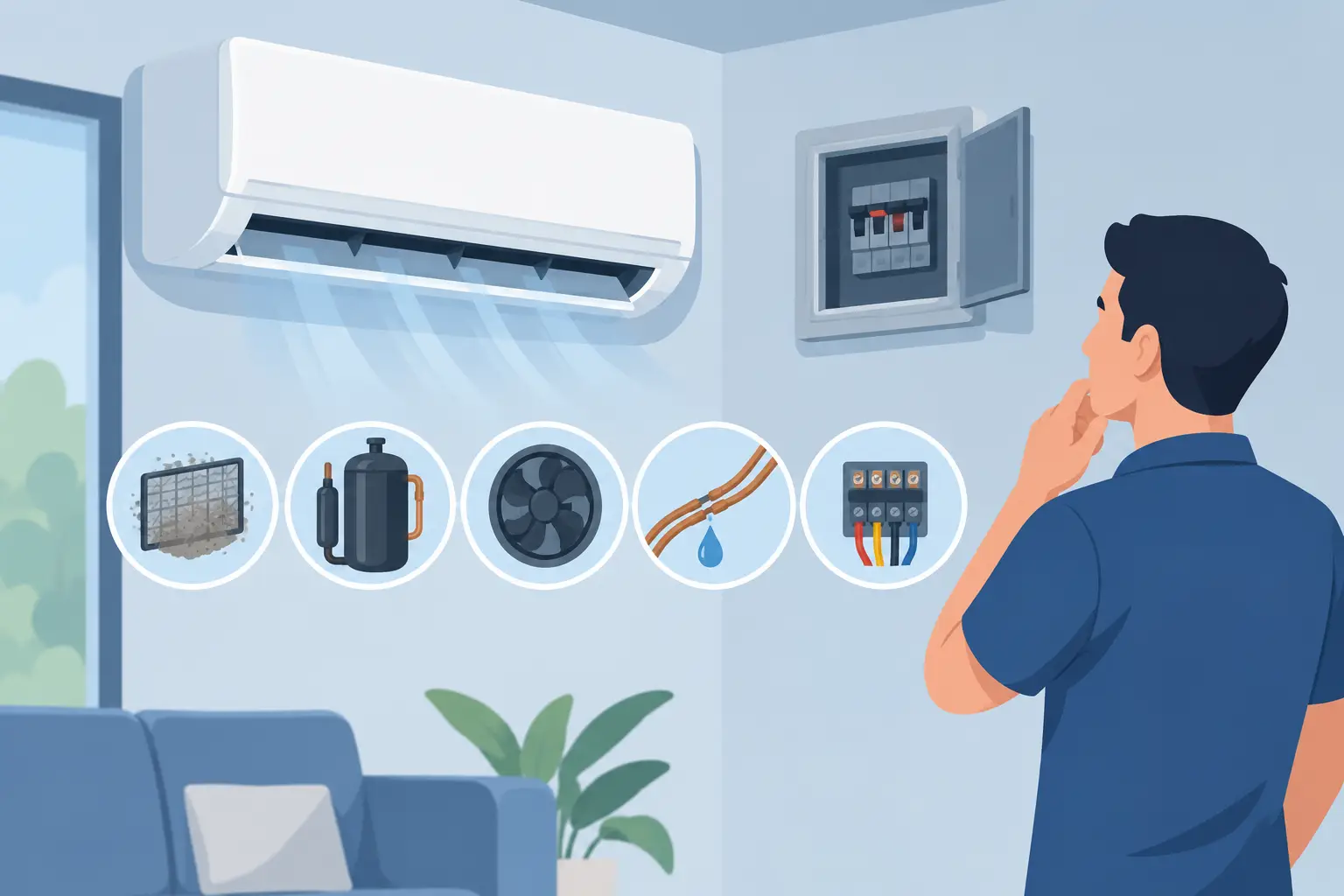
When the air conditioner trips your power on a hot Gold Coast afternoon, it is more than an inconvenience. Understanding why aircon trips helps you respond safely, protect your system and avoid repeatedly resetting a circuit that may have a genuine electrical fault.
An air conditioner is one of the larger electrical loads in a home or business. It has motors, control boards, capacitors, wiring and, in many systems, an outdoor compressor working together. A fault in any of these components can cause a circuit breaker or safety switch to trip. The right response depends on what has tripped and when it happens.
First, identify what has tripped
Check your switchboard before assuming the air conditioner itself has failed. A circuit breaker and a safety switch do different jobs, and the difference gives a licensed electrician useful information.
A circuit breaker generally trips when a circuit is overloaded or there is a short circuit. This can happen if the air conditioner is drawing more current than the circuit can safely handle, if a component has failed, or if there is damaged wiring.
A safety switch, also called an RCD, trips when it detects electricity leaking to earth. This is a critical safety function. Moisture, deteriorated insulation, damaged cabling or a fault inside the air conditioning equipment can all cause earth leakage. If the safety switch trips, do not keep resetting it in the hope the problem will disappear.
Some air conditioning systems also have their own isolator, local breaker or fault code. If your indoor unit turns off but no switch has tripped at the board, the issue may be a system fault rather than a household electrical trip.
Why aircon trips at the switchboard
A faulty compressor or outdoor unit
The outdoor unit does the heavy work of moving heat out of the building. Its compressor and fan motor require a substantial amount of power, particularly at start-up. If the compressor is failing, seized, overheating or developing an electrical fault, it can trip the breaker as soon as cooling starts.
Outdoor units are exposed to rain, humidity, salt air in coastal areas, insects and general wear. Corroded terminals, water ingress and damaged insulation are common concerns over time. A technician needs to test the unit rather than relying on visual checks alone.
A failed capacitor or fan motor
Capacitors provide the electrical boost needed to start and run motors. When a capacitor weakens or fails, the compressor or fan may struggle to start, hum briefly, or cause the circuit to trip. A failing fan motor can create a similar issue, especially when the outdoor unit is hot and working hard.
These are not DIY repairs. Air conditioning equipment can retain an electrical charge even after isolation, and incorrect replacement parts can damage the system or create further faults.
Dirty filters and restricted airflow
A blocked return-air filter does not always trip the power immediately, but it can make the system work harder and run hotter. Restricted airflow may contribute to an overheated indoor fan motor, frozen coils or protective shutdowns, particularly during long periods of use.
If it is safe to do so, turn the system off at the controller and clean the washable filters according to the manufacturer’s instructions. Make sure they are completely dry before refitting them. Keep furniture, boxes and curtains clear of indoor returns and outdoor-unit airflow.
This simple maintenance step can prevent avoidable strain, but it will not fix an electrical trip caused by insulation damage, a failed component or faulty wiring.
An overloaded circuit
Older homes, extensions and altered commercial spaces do not always have circuits designed for modern electrical demand. If an air conditioner shares a circuit with other high-load equipment, such as a dryer, kettle, microwave, pool equipment or refrigeration, the total load may exceed the breaker rating.
Air conditioners are commonly installed on a dedicated circuit, but this depends on the size of the system, the existing installation and applicable electrical requirements. An electrician can assess the circuit, cable size, breaker rating and switchboard capacity. Simply fitting a larger breaker is not a safe solution unless the cable and installation are designed for it.
Damaged wiring or loose electrical connections
Heat, vibration, pests, ageing insulation and poor previous work can all affect cables and connections. A loose terminal can heat up under load. Damaged cable insulation may allow current to leak to earth, causing a safety switch to operate.
These faults may appear inconsistent. The air conditioner might run normally one day, then trip after rain, during humid weather or once the unit has operated for half an hour. Intermittent faults still require prompt investigation because they can worsen over time.
Moisture and water ingress
Queensland’s humidity and summer storms can expose faults in outdoor equipment, isolators and cable entries. Condensation drainage issues can also affect indoor components. If your aircon trips after heavy rain, or if you can see water around electrical parts, leave the system off and arrange a professional inspection.
Never remove covers from the indoor or outdoor unit to investigate water near wiring. What looks like a drainage problem can also involve live electrical components.
When does the air conditioner trip?
The timing of the trip is one of the most useful details you can provide when booking a repair.
If it trips immediately when you switch the system on, the cause may involve the supply circuit, wiring, control board or an immediate earth leakage fault. If it trips only when cooling begins, attention often turns to the compressor, capacitor or outdoor-unit wiring.
If it trips after running for a while, overheating, restricted airflow, a struggling motor or a loose connection becomes more likely. A trip that occurs only during wet weather may indicate moisture entering an isolator, terminal enclosure or damaged cable.
For split systems, note whether the indoor fan starts, whether the outdoor unit starts, and whether the switchboard breaker or safety switch moves to the off position. These observations can help the technician diagnose the problem efficiently without you needing to touch any electrical parts.
What you can safely do before calling for help
Start by switching the air conditioner off at its controller. At the switchboard, reset the tripped breaker or safety switch once only. If it holds, do not immediately run the air conditioner at full load. Turn on the system and monitor it from a safe distance.
If the switch trips again, leave it off. Do not repeatedly reset it, bypass the safety switch, replace a fuse with a larger one, or use an extension lead as a workaround. Those actions can increase the risk of electric shock, damaged equipment or fire.
You can clean accessible filters, check that outdoor airflow is not blocked by leaves or stored items, and make a note of any error code displayed on the controller. You should also turn off other major appliances on the same circuit if you know they are connected. Beyond that point, testing should be completed by a qualified professional.
When to call a licensed electrician or air conditioning technician
Arrange service promptly if the safety switch trips more than once, the breaker will not reset, there is a burning smell, buzzing, scorch marks, water around electrical equipment or visible cable damage. Turn the system off and treat these signs as urgent.
A professional can test insulation resistance, current draw, capacitors, motors, compressor operation, terminals and protective devices. They can also determine whether the fault is within the air conditioning unit, the dedicated circuit, the isolator or the switchboard.
For homes, rentals and commercial premises across Ormeau, the Gold Coast and Logan, All Phase Electrical can assess both the air conditioning equipment and the electrical supply behind it. That matters when the fault is not immediately obvious, or when an older switchboard or circuit arrangement may be contributing to the problem.
A tripping air conditioner is doing something useful: it is signalling that the electrical system needs attention. Leave repeated trips to a licensed professional, and you will be far more likely to protect your property, restore reliable cooling and keep everyone using the premises safe.