Best Electrical Safety Devices for Your Property
By All Phase Electrical QLD · Published · Updated
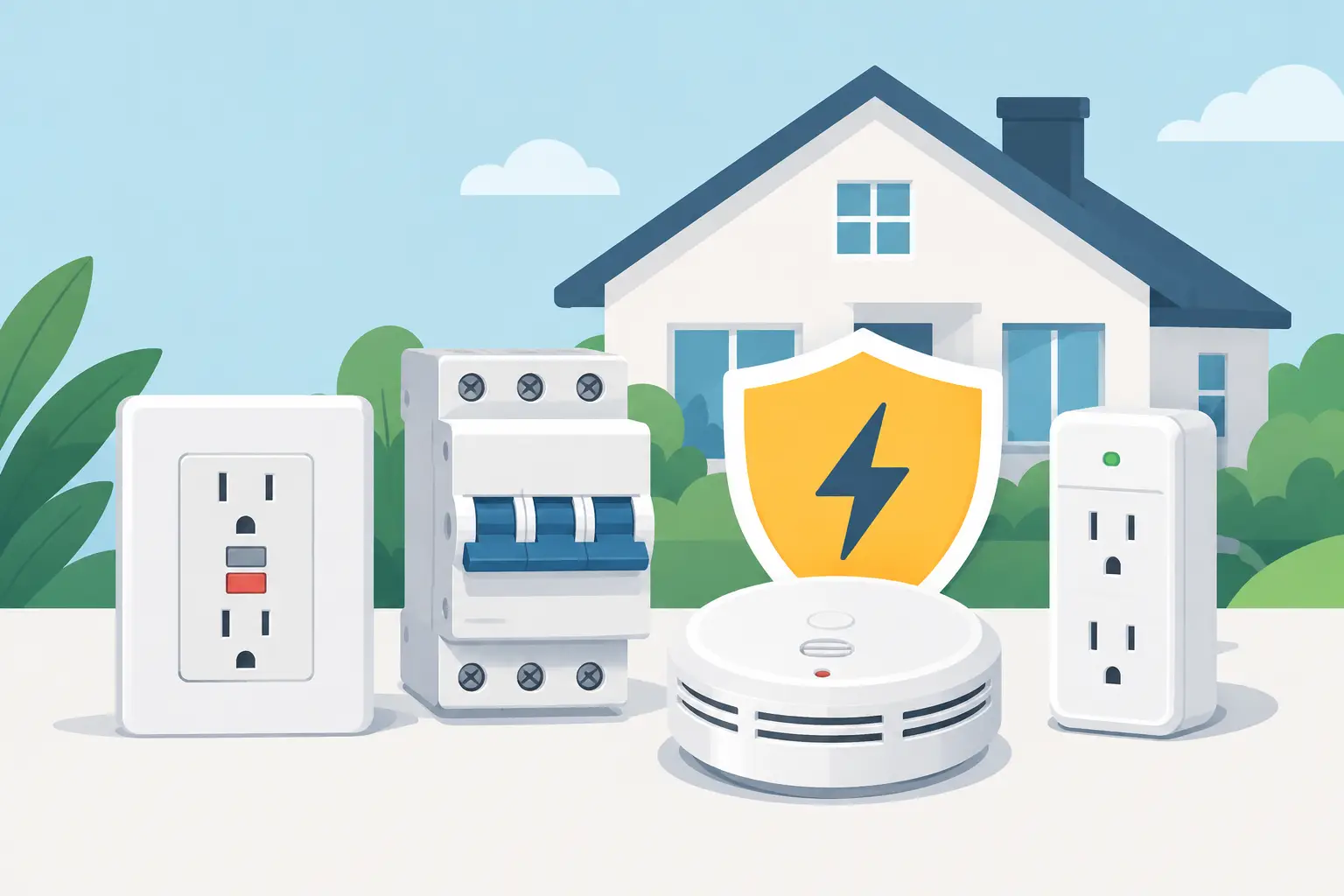
A modern switchboard can look perfectly normal while offering far less protection than a current installation. The best electrical safety devices work quietly in the background, limiting the risk of electric shock, electrical fire, equipment damage and delayed fault detection. For homes, rental properties and commercial premises across Ormeau, the Gold Coast and Logan, the right devices depend on the age of the building, how it is used and what is already installed.
Electrical safety is not achieved by fitting one product and forgetting about it. It comes from selecting appropriate protection, having it installed by a licensed electrician and keeping it in working order. Some devices are essential for nearly every property. Others are worthwhile upgrades where there is sensitive equipment, older wiring or a higher fire risk.
Best electrical safety devices for homes and businesses
Safety switches (RCDs)
A safety switch, also called a residual current device or RCD, is one of the most effective protections against electric shock. It monitors electricity flowing through a circuit. If it detects an imbalance that may indicate power is travelling through a person or a damaged electrical path, it disconnects the power very quickly.
Safety switches should not be confused with circuit breakers. A circuit breaker protects wiring and equipment from overloads and short circuits. An RCD is designed to protect people from dangerous leakage current. Many modern switchboards use combined RCD/circuit breaker units, giving both forms of protection on the same circuit.
For a household, RCD protection is particularly relevant for power points, lighting, outdoor circuits, bathrooms, kitchens, garages and pool equipment. Businesses also need to consider areas where staff use portable appliances, cleaning equipment, machinery or outdoor power. If a safety switch trips repeatedly, do not keep resetting it. Unplug appliances where safe to do so, leave the affected circuit off and arrange a licensed electrician to identify the fault.
Modern circuit breakers
Circuit breakers replace older rewireable fuses and provide a safer, more practical way to protect electrical circuits. They trip when a circuit is overloaded or shorted, helping prevent cables from overheating and reducing fire risk.
A switchboard with old ceramic fuses, mixed components or no clear circuit labels is worth assessing. It may still function, but it can be harder to isolate faults safely and may not support the electrical demands of air conditioning, induction cooking, EV charging, workshop tools or modern office equipment. A switchboard upgrade can also make it possible to add RCD protection where it is missing or incomplete.
Smoke alarms
Smoke alarms give occupants the time to get out of a building before smoke and fire spread. In Queensland, smoke alarm obligations are specific and have changed over time, particularly for properties being sold, leased or transferred. Requirements can vary depending on the type and age of the dwelling, but photoelectric, interconnected alarms are the expected standard in many situations.
A compliant alarm is only useful when it is correctly located, powered and tested. Alarms should be installed in the required circulation spaces and bedrooms where applicable, rather than treated as an afterthought. Interconnected alarms offer a major benefit: when one alarm detects smoke, the others sound as well. This is especially valuable in larger homes, multi-level properties and rental dwellings.
Battery changes are not a substitute for proper maintenance. Test alarms regularly using the test button, keep them free from dust and arrange replacement when they reach the end of their service life. If you manage a rental property, keep clear records of testing, maintenance and any replacements.
Surge protection devices
Power surges can be caused by lightning activity, switching in the electricity network or large loads turning on and off within a property. They may not always cause an obvious failure. Repeated smaller surges can gradually damage circuit boards in air conditioners, televisions, computers, security systems, appliances and smart home equipment.
A surge protection device fitted at the switchboard helps reduce the voltage reaching connected circuits. It is not a guarantee against every severe event, and plug-in power boards can still have a role for sensitive equipment. However, switchboard-level protection provides broader coverage and is a sensible consideration for homes and businesses that rely on electronics, CCTV, refrigeration controls or network equipment.
The value depends on the property. A small, lightly equipped unit may have a different risk profile from a home with solar, multiple air conditioners and entertainment systems, or a business running point-of-sale equipment and security cameras. A licensed electrician can recommend protection that suits the installation rather than adding devices that do not address the real risk.
Arc fault detection devices
Arc fault detection devices, often called AFDDs, are designed to identify dangerous electrical arcing that ordinary circuit breakers and RCDs may not detect. Arcing can occur when a cable, connection or accessory is damaged, loose or deteriorating. It can create enough heat to start a fire without necessarily drawing enough current to trip a standard breaker.
These devices are not required in every existing property, and they are not a replacement for sound wiring or regular maintenance. They can be a strong option in higher-risk applications, including older buildings, timber-framed homes, accommodation settings and areas with concealed or difficult-to-access wiring. The trade-off is added cost and the need to select equipment compatible with the switchboard and circuits.
Correctly installed power points and weatherproof outlets
Damaged power points, loose sockets, cracked faceplates and overloaded adaptors are everyday hazards that are often ignored until they fail. Replacing worn accessories and adding outlets where they are genuinely needed reduces reliance on double adaptors and overloaded power boards.
Outdoor power points need appropriate weatherproof protection and must be installed for the environment they are exposed to. The same applies to outlets near water, in garages and in commercial wash-down or dusty areas. The device itself matters, but the wiring, enclosure rating and installation method matter just as much.
Choosing electrical safety devices for the right risk
The best electrical safety devices are not identical for every property. A newer family home may benefit most from confirming RCD coverage, smoke alarm compliance and surge protection. An older home may need a broader switchboard upgrade and investigation of ageing wiring before additional protection is fitted.
For landlords and property investors, priorities often include smoke alarm compliance, reliable RCD protection and prompt rectification of damaged fittings. For a small business, the focus may include protection for staff, customer areas, computer systems, refrigeration, air conditioning and security equipment. Facility managers may also need a documented testing and maintenance approach across multiple circuits and tenancies.
Warning signs should be addressed promptly, particularly when they involve any of the following:
- safety switches that will not reset or trip without an obvious reason
- burning smells, buzzing sounds or discolouration around power points or the switchboard
- lights that flicker, circuit breakers that trip frequently or power points that feel loose
- an old fuse board, missing circuit labels or electrical work that appears improvised
- smoke alarms that are absent, expired, chirping or not interconnected where required.
Do not remove a switchboard cover, attempt to repair wiring or replace electrical protective devices yourself. These are safety-critical components. A licensed electrician can test circuits, locate faults, check compliance and provide options based on the property rather than guessing at the cause.
Testing and maintenance are part of protection
Even quality electrical safety devices need attention. Use the test button on RCDs and smoke alarms regularly in line with manufacturer guidance, noting that an RCD test will interrupt power to its circuit. Plan this around computers, medical equipment, refrigeration or business operations where an unexpected shutdown could cause a problem.
A professional inspection is particularly worthwhile after major renovations, storm damage, repeated tripping, water ingress, a change of tenancy or the installation of high-load equipment. Electrical safety checks can identify loose connections, inadequate circuits, poor switchboard condition and protection gaps before they become an emergency callout.
At All Phase Electrical, licensed electricians can assess existing protection, upgrade switchboards, install compliant smoke alarms and help property owners make practical safety improvements. The right approach is not to buy every available device. It is to make sure the protection installed at your property is suitable, compliant and ready to respond when it is needed most.