How to Prepare for an Electrician Visit Properly
By All Phase Electrical QLD · Published · Updated
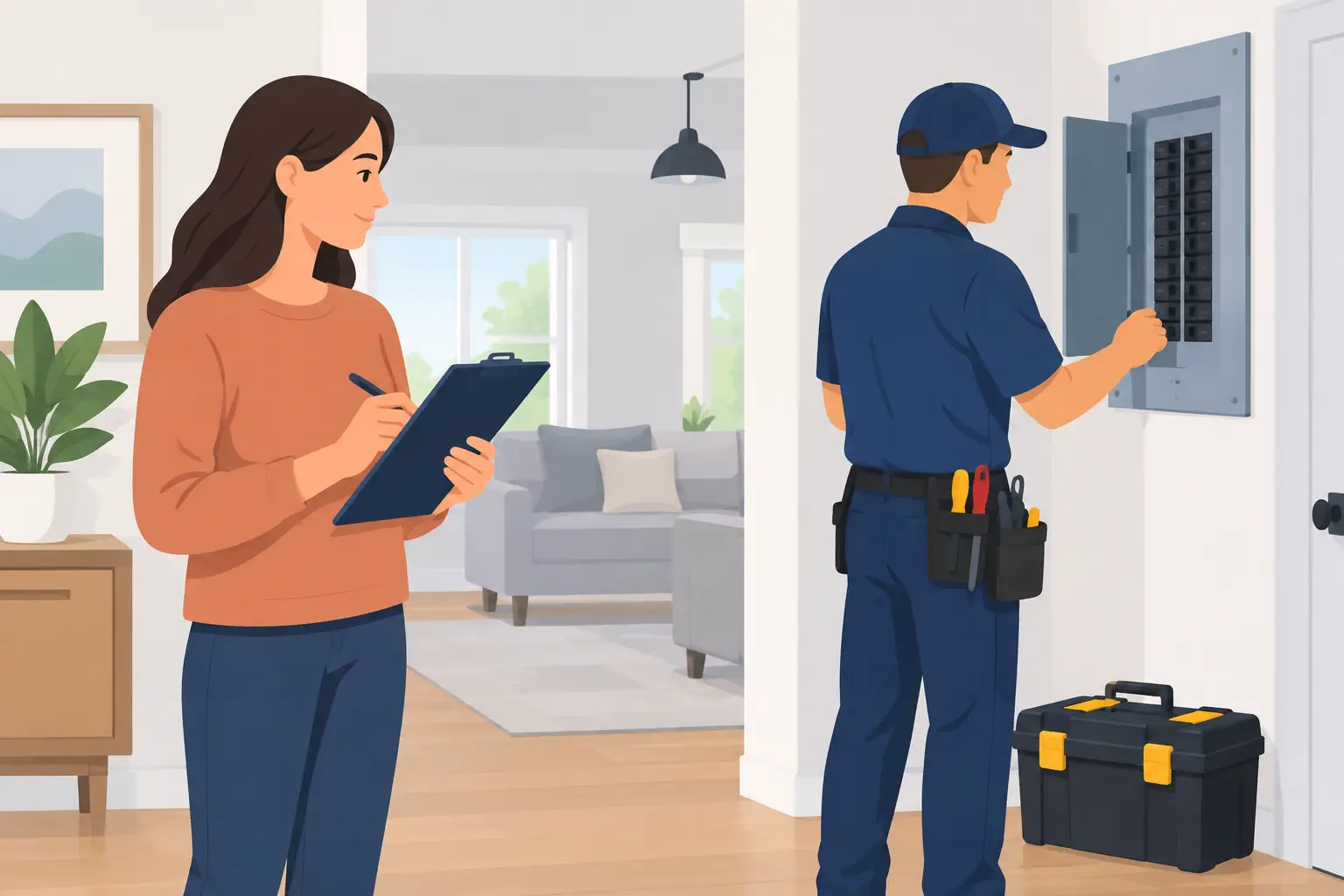
A faulty power point behind a heavy cabinet, a tripping safety switch, or plans for new air conditioning can all be resolved faster when the electrician can assess the job without avoidable delays. Knowing how to prepare for an electrician visit helps protect your property, keeps the work area safe, and gives your licensed electrician the information needed to provide the right solution.
How to prepare for an electrician visit before they arrive
Start by being clear about the reason for the booking. A short description such as “the kitchen lights flicker when the exhaust fan runs” is far more useful than “there is a problem with the lights”. Note when the issue started, whether it happens constantly or intermittently, and what was operating at the time.
If you have booked work rather than a repair, write down what you want to achieve. For example, you may need more power points in a home office, exterior lighting for a driveway, a switchboard upgrade, CCTV coverage around entry points, or a split-system air conditioner installed. The electrician can then assess the practical requirements, likely cable routes, compliance needs, and any limitations within the existing installation.
Take a few photos or short videos if the fault is intermittent. A video of lights dimming, a humming switchboard, or an appliance causing a circuit to trip can give useful context. Do not remove covers, dismantle fittings, or attempt to recreate a dangerous fault for the sake of a recording.
Keep a record of warning signs
Electrical faults do not always present the same way every time. Before the appointment, make a simple note of relevant symptoms: which circuit is affected, what rooms have lost power, whether a safety switch has tripped, and whether there is a burning smell, heat, buzzing, or discolouration around outlets or fittings.
Also note any recent changes. New appliances, renovations, water leaks, storm damage, pest activity in the roof, or a newly installed pool pump can all be relevant. This information helps narrow down fault-finding and reduces time spent tracing the issue.
If there is an immediate risk, such as smoke, sparks, exposed wiring, electric shock, or water affecting electrical equipment, treat it as an emergency. Keep people away from the area, switch off power at the main switch only if it is safe to do so, and seek urgent assistance. Never touch damaged wiring or electrical equipment that may be wet or live.
Make the work area safe and accessible
An electrician needs safe access to the affected point, switchboard, roof space, ceiling cavity, outdoor unit, or equipment. Moving obstacles before the appointment is one of the most useful things a property owner or manager can do.
Clear furniture, stored boxes, rugs, and personal belongings away from power points, light fittings, electrical panels, and appliance connections. If a bedroom fan needs replacing, clear the area beneath it. If the switchboard is in a garage, remove anything blocking the panel and provide enough room for the electrician to work safely.
For outdoor work, unlock side gates and clear vegetation or stored items from around the work zone. This is particularly helpful for exterior lighting, security cameras, air conditioning condensers, pool equipment, and shed power. If access involves a roof space, move vehicles from underneath the access point where practical and make sure there is a clear route through the property.
Children and pets should be kept away from the work area. Electrical work may involve tools, ladders, open ceiling spaces, temporary isolation of power, and exposed work zones while repairs or installation are underway. Let the electrician know in advance if there are pets on site, especially dogs in yards where external work is planned.
Check access, parking and site details
For homes across Ormeau, the Gold Coast and Logan, access can vary from a straightforward driveway to a managed complex, gated community, unit block, or commercial site. Confirm any instructions the electrician will need before arrival.
Provide gate codes, intercom details, building access requirements, visitor parking directions, or contact details for a tenant, site manager, or receptionist. For strata properties and commercial premises, check whether building management needs to approve access to common areas, risers, plant rooms, roofs, or electrical cupboards.
Parking matters more than many people expect. Electrical work often requires tools, test equipment, cable, ladders, fittings, and replacement components to be carried from the vehicle. If possible, leave a nearby parking space clear or explain where the electrician can park without blocking neighbours, customers, or deliveries.
If you are a landlord or property manager, make sure the electrician has authority to enter and that the tenant knows the appointment time. A missed visit caused by access problems can delay essential repairs and create unnecessary cost.
Be ready to explain the job on site
A brief conversation at the beginning of the visit can save significant time later. Show the electrician the affected areas and explain what you have noticed, including whether the issue is worse at certain times of day or when specific appliances are used.
For planned upgrades, be prepared to discuss how you use the space. A family kitchen, home office, workshop, retail counter, rental property, or warehouse each has different electrical demands. The best location for a power point, camera, air conditioner, smoke alarm, or exterior light depends on practical use as well as installation requirements.
It is also useful to mention future plans. If you are renovating, adding solar, installing an electric vehicle charger, converting a garage, or expanding a business area, tell the electrician early. A solution that works for today may need to allow for additional circuits, switchboard capacity, or cable pathways later.
Have relevant information available
You do not need technical knowledge, but any documentation you have can help. This may include previous electrical invoices, appliance manuals, renovation plans, switchboard upgrade records, air conditioning details, or photos from before walls and ceilings were closed.
If the electrician is attending a commercial site, identify the person authorised to approve work and any safety procedures that apply. Some premises require sign-in, inductions, isolation permits, after-hours work, or coordination with other trades. Raising these requirements at the start helps avoid disruptions once work is underway.
Plan for a possible power interruption
Some electrical repairs and most installation or upgrade work require circuits to be isolated. A switchboard upgrade, fault repair, new circuit installation, smoke alarm replacement, or hardwired appliance connection may involve a temporary loss of power to part or all of the property.
Before the visit, save work on computers, charge essential mobile devices, and shut down sensitive electronics where possible. If you work from home, plan around meetings and internet requirements. For businesses, consider point-of-sale systems, refrigeration, security equipment, servers, lighting, production equipment, and customer access.
The level of disruption depends on the job. A simple power point replacement may only affect one circuit briefly, while a major switchboard or commercial electrical project can require more planning. Your electrician should explain expected downtime once the scope of work is confirmed.
If anyone in the property relies on medical equipment, refrigerated medication, essential mobility equipment, or other critical powered devices, raise this when booking. Alternative arrangements may be needed to keep the work safe and minimise risk.
Avoid DIY checks before a licensed electrician arrives
It can be tempting to reset a tripping breaker repeatedly, swap fittings, or remove a power point cover to see what is wrong. These actions can turn a manageable fault into a more serious safety issue. In Queensland, electrical work must be completed by appropriately licensed electrical workers, with limited exceptions for basic tasks such as changing a light bulb.
You can safely identify which appliances were running when a circuit tripped and unplug portable appliances if they appear connected to the issue. However, do not test wiring, open the switchboard, handle damaged cords, or continue using outlets that are hot, loose, cracked, wet, or showing signs of burning.
A safety switch that trips once may indicate a temporary appliance issue. One that keeps tripping needs proper investigation. Leaving it off until a licensed electrician assesses the fault is often the safest choice.
Set clear expectations for the outcome
A good electrical visit starts with a clear problem and finishes with clarity about what has been done. Before work begins, confirm the scope, likely approach, and any options that may affect cost or timing. Some faults have an obvious cause; others require diagnostic testing before the repair can be quoted accurately.
Ask practical questions about what will be isolated, whether access holes or patching may be required, how long the work is expected to take, and whether any follow-up work is likely. For installations, confirm the position of fittings and equipment before cables are run or holes are cut.
Once the job is complete, ask the electrician to show you the result and explain any changes to circuits, switches, safety devices, or equipment operation. Keep invoices, compliance documentation, and any recommendations for future maintenance with your property records.
A prepared site lets the electrician focus on the work that matters: finding the fault, completing compliant installation, and leaving your home or premises safer and more functional. Whether the job is urgent or planned, a few minutes of preparation gives your electrical contractor the best possible start.